
Polishing Rouge and Mass Finishing Compounds: Choosing Barrel or Vibratory Chemistry
Jewelers, hardware manufacturers, and metal finishers searching for polishing rouge often make an expensive production mistake: they drop solid bar rouge (stearic-acid/tallow wax loaded with iron oxide or tripoli) straight into a wet vibratory bowl or dry tumbling barrel expecting a mirror shine—only to pull out parts coated in sticky red-brown grease that plugs media pores and refuses to rinse clean.
The central thesis of this guide is clear: traditional bar polishing rouge is engineered strictly for high-speed frictional melting on spinning cloth buffing wheels, whereas automated mass finishing requires either dry-seasoned tumbling pastes/creams inside hardwood, bamboo, or walnut-shell barrels, or water-soluble liquid compounds (LC10, MC8, PL10, JTJ50, JTS5) inside wet vibratory and centrifugal chambers. Matching compound carrier chemistry to chamber physics prevents wax-clogged stones, gray metal smear, and hours of ultrasonic solvent washing. For related compound and cream workflows, see our polishing cream and ZAM guide, compound for steel guide, and finishing gold guide.
Why Traditional Bar Rouge Fails Inside Wet Vibratory Bowls and Barrels
Solid buffing bars (red rouge, white diamond, black emery, green chromium oxide, tripoli) rely on a heat-activated wax binder designed to melt only when pressed against a high-RPM cotton or sisal wheel.

Cold Water Never Melts Waxy Rouge Binders
Inside a wet vibratory grinder or octagonal rotary barrel, water temperatures stay cool. Chunks of bar rouge simply break into waxy pellets that smear unevenly across parts and glaze ceramic stones shut—killing abrasive cutting action within minutes.
Trapped Red Iron Oxide Inside Engraved Recesses and Threads
Even when used on manual buffing wheels, waxy red rouge packs stubbornly into ring prongs, stamped logos, knurling, and blind bolt holes. Cleaning red-rouge wax out of intricate jewelry or brass hardware demands hot ultrasonic degreasing baths, whereas dry walnut-shell or corncob barrel tumbling with light cream leaves recesses spotless.
Zero Suspension or Rust Protection in Wet Metal Grinding
Bar rouge contains zero corrosion inhibitors and zero surfactant dispersants. In wet carbon-steel or stainless finishing, metallic wear fines must stay suspended in flowing liquid foam so they flush straight out of the drain screen rather than re-depositing onto workpieces.
| Compound Format | Carrier Chemistry | Designed Equipment | Primary Failure if Misused |
|---|---|---|---|
Solid bar rouge (red / green / tripoli) |
Heat-melting wax/tallow binder | High-RPM manual cloth buffing wheels | Clumps in cold wet bowls; packs into blind crevices |
| Dry barrel polishing cream / paste | Light oil-dispersed fine abrasive paste | Dry rotary barrels with wood pegs / walnut / cob | Clumps if poured directly onto parts without seasoning pegs |
Water-soluble liquid (LC10 / MC8 / PL10) |
Surfactants, lubricants & inhibitors | Wet vibratory bowls, centrifugal discs, magnetic tumblers | Foam overload or rust if dosed without flow-through |
[DESIGN: Four-panel comparison of glazed ceramic stones from bar rouge, clumped dry wax balls, clean dry walnut gloss, and bright liquid-burnished metal]
Dry Tumbling Pastes & Creams: The Mass Finishing Equivalent of Rouge
When manufacturers want true mirror luster on gold, silver, brass, pewter, or acrylic edges without wet slurry or manual buffing, dry organic media charged with polishing cream replaces bar rouge cleanly.

Walnut Shell Media Charged With Fine Mirror Cream for Brass and Gold
Crushed walnut shell media seasoned with a measured dose of fine polishing cream delivers gentle micro-burnishing across gold rings, brass fittings, and bronze hardware. Unlike heavy bar rouge, walnut granules reach inside filigree cutouts and stampings without packing sticky wax into crevices.
Hardwood and Bamboo Pegs With Cutting & Brightening Pastes for Acrylic and Eyewear
For eyewear frames and cut PMMA blocks, three-stage dry barrel tumbling uses graded wood or bamboo pegs charged first with coarse cutting paste and then with fine brightening cream—producing optical gloss with zero thermal melting or solvent stress crazing.
Corncob Media as the Final Oil-Wiping Stage
After dry cream polishing—or immediately after wet steel ball burnishing—clean dry corncob media inside a heated vibratory bowl absorbs trace cream residue and moisture droplets, leaving every flat face and tight recess crystal clear.
Water-Soluble Liquid Compounds Replacing Rouge on Metal Lines
For high-volume deburring, descaling, and mirror burnishing on steel, stainless, aluminum, and brass, liquid flow-through compounds outperform dry rouge pastes on speed, cleanliness, and cooling.

LC10 for Clean Wet Grinding and General Alloy Deburring
LC10 serves as the daily workhorse surfactant-and-lubricant compound for wet ceramic and plastic cutting—keeping stone pores clean, suspending metallic fines in steady drain flow, and maintaining neutral safety across mixed metals.
MC8 for Stripping Heavy Oxide Scale and Weld Heat Tint
When stamped carbon steel carries dark mill scale or fabricated stainless hardware carries weld discoloration, MC8 combines controlled chemical scale softening with ceramic cutting action so oxide crusts break away cleanly without harsh acid pickling tanks.
PL10 for Stainless Steel Ball Burnishing Mirror Luster
Pairing PL10 high-lubricity burnishing compound with stainless steel burnishing media cushions thousands of hard steel spheres as they cold-work stainless steel, brass, and copper parts to bright reflective clarity—delivering true mirror compression without a drop of waxy rouge.
JTJ50 and JTS5 for Targeted Rust Inhibition and Soft-Alloy Brightening
Carbon steel parts require rapid corrosion protection during wet processing and post-rinse staging (JTJ50), whereas soft aluminum (6061, 7075) and zinc die castings demand mild, non-etching brightening chemistry (JTS5) to prevent dark gray smut.
| Alloy Family | Stage 1 Cut Chemistry | Final Brightening / Polish Route | Key Boundary to Avoid |
|---|---|---|---|
304 Stainless steel |
LC10 (or MC8 for scale) + ceramic |
PL10 + stainless steel burnishing balls |
Never dump solid bar rouge into wet bowl |
| Carbon & mild steel | LC10 / MC8 + ceramic |
Rust-inhibited rinse (JTJ50) + heated spin-dry |
Never let wet steel air-dry un-inhibited |
6061 / 7075 Aluminum |
Neutral LC10 / JTS5 + plastic cones |
Clean porcelain spheres or dry cob wipe | Never use high-pH soaps or heavy steel shot |
| Brass, bronze & gold | Neutral LC10 + fine plastic/ceramic |
Walnut shell + dry mirror cream (or PL10 + steel pins) |
Avoid ammonia-heavy cleaners that stress-crack brass |
[DESIGN: Alloy-to-chemistry decision matrix linking stainless steel, carbon steel, aluminum, and brass/gold to liquid compounds and dry creams]
How to Season Dry Tumbling Media Without Creating Sticky Clumps
Even purpose-built dry barrel polishing creams fail if operators pour paste straight onto raw workpieces inside the drum.

Step 1: Charge Empty Walnut, Cob, or Wood Media First
Place clean, dry organic media into the rotary barrel without any parts inside, then add the measured cream or paste dose and light conditioning oil.
Step 2: Run Empty Until Every Granule Carries an Even Matte Coat
Rotate the barrel empty until all cream lumps break down completely and every walnut granule or wood peg feels uniformly satin-dry rather than tacky. Only then load your brass, gold, or acrylic workpieces.
Step 3: Screen Out Spent Dust Between Campaigns
Over repeated batches, dried cream dust and fine metal wear residue settle at the bottom of the barrel. Screen organic media over a fine mesh tray periodically to discard spent powder before adding a small cream refresh.
Equipment Platforms That Deliver Rouge-Grade Gloss Without Hand Buffing
Automating the finish of traditional polishing rouge requires matching chamber motion to part size and fragility.
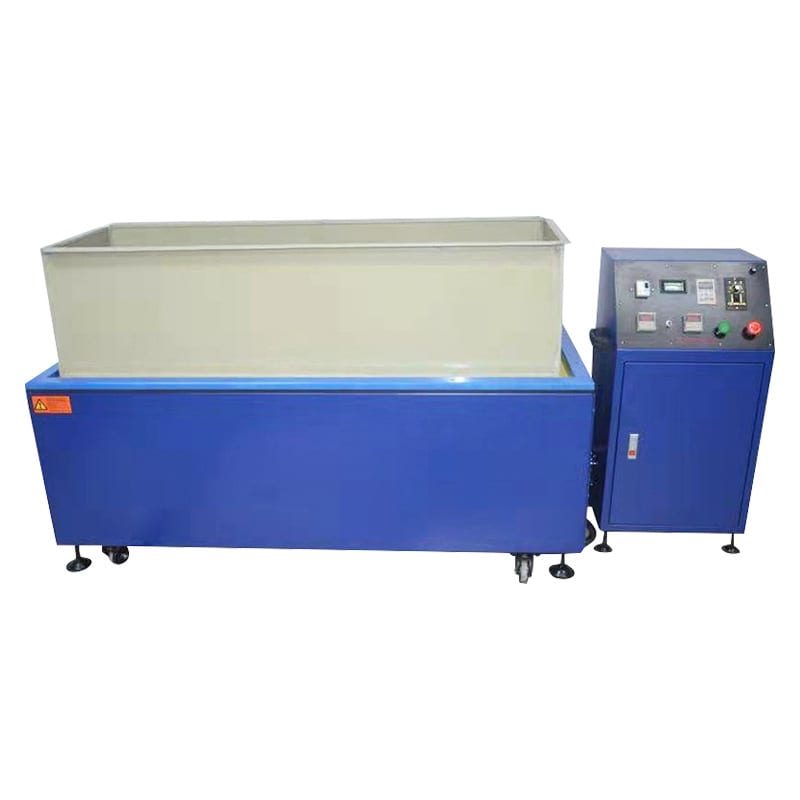
Multi-Tier Dry Rotary Barrels for Jewelry, Eyewear, and Small Hardware
Dry rotary barrels excel at gentle, long-duration sliding friction with cream-charged walnut shell, corncob, and wood pegs—turning hundreds of rings, buckles, or frames simultaneously into uniform showroom gloss.
Wide-Table OBD Magnetic Tumblers for Non-Ferrous & 304 Crevices
For intricate jewelry castings, watch cases, and slotted brass connectors where even walnut granules struggle to reach deep undercuts, a translating OBD magnetic tumbler drives fine 304 stainless pins with neutral compound water to brighten internal recesses rapidly.
Vibratory Bowls With Steel Burnishing Media for High-Volume Metal Gloss
Heavy commercial hardware, cutlery, and stainless trim rings reach deep mechanical mirror luster fastest inside polyurethane-lined vibratory bowls charged with PL10 and stainless steel burnishing balls, followed by heated corncob drying.
Common Failure Modes When Transitioning From Rouge to Mass Finishing
Operators moving from manual buffing wheels to automated tumbling frequently hit four avoidable snags.
[DESIGN: Troubleshooting gallery showing wax-glazed ceramic stones, clumped walnut balls, cloudy burnished steel, and water-spotted brass]
Glazed Ceramic Stones From Improper Soap or Oil Carryover
If cutting speed collapses mid-shift, residual machining oil or misapplied waxy compound coated the ceramic charge. Pre-degrease oily parts and maintain steady fresh-water LC10 flow-through.
Dark Gray Haze After Steel Ball Burnishing
Dirty recirculated PL10 water turns into fine metallic slurry that dulls mirror surfaces. Flush the steel ball charge in clean hot water with fresh PL10 whenever foam turns dark gray.
Sticky Paste Spots Packed Inside Small Holes
Loading parts before seasoning dry walnut or wood media glues soft cream pellets inside drilled holes. Always season media empty first.
Expecting Final Mirror Polish to Erase Deep Grinding Scratches
Neither bar polishing rouge nor PL10 steel ball burnishing can erase deep saw marks or coarse grinding scores—they only shine the surface as-is. Always level rough marks completely during Stage 1 ceramic or plastic cutting before moving to final brightening.
Mixing Steel Burnishing Media With Ceramic Chips Across Campaigns
Even a small handful of broken ceramic cutting chips left inside a burnishing barrel or vibratory bowl will carve fresh matte scratches into stainless steel or brass parts at the exact same moment PL10 and steel balls are trying to burnish them smooth. Keep Stage 1 ceramic cutting and Stage 2 mirror burnishing physically separated in dedicated machines or thoroughly rinsed stainless media containers.
[DESIGN: Close-up comparison of mirror-burnished stainless steel vs micro-scratched surface caused by stray Stage 1 ceramic grit]
Honest Boundaries: What We Do and Do Not Supply
At Xiamen Jin Tai Jin Grinding Technology Co.,Ltd. (brand: Jings Polish), our workshop roots date back to 1996 and our company was formally established in 2009, delivering over 200,000+ sets of grinding and polishing solutions worldwide. Across our catalogue, we manufacture 21 machine platforms backed by 24 granted Chinese IP rights (1 invention patent, 15 utility model patents, and 8 design patents), under ISO 9001 certification 00726Q01571R001 (valid 2026-06-03 to 2029-06-02) and CE certifications M.2023.206.C88121 (Vertical, 8 models) and M.2023.206.C88120 (Horizontal, 13 models), valid until 2028-07-24.
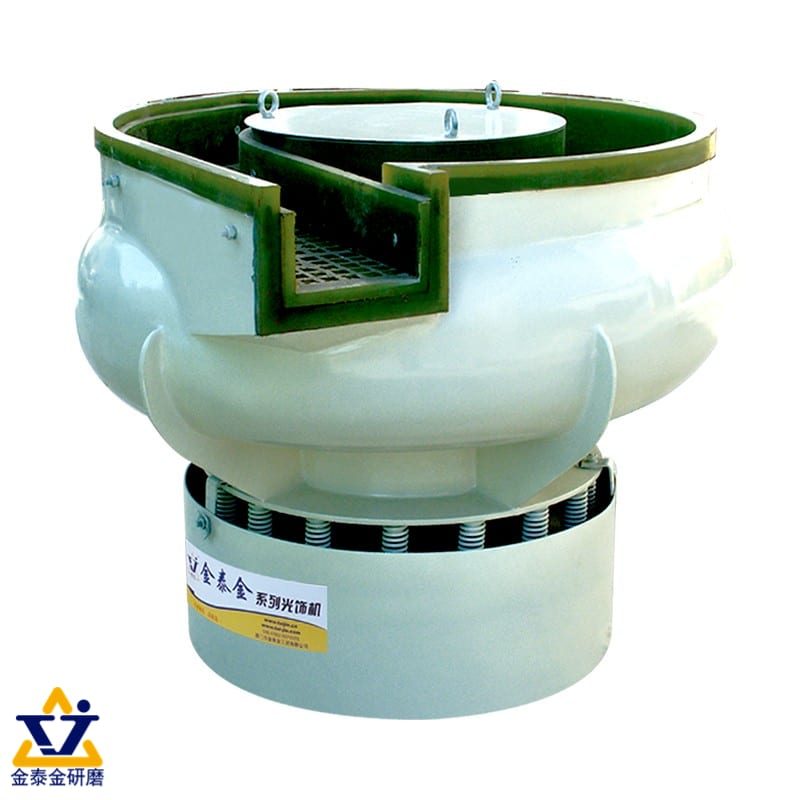
Industrial Mass Finishing Machines, Media, and Compounds—Not Hand-Buffing Rouge Bars
We manufacture and supply vibratory bowls, divided troughs, dry rotary barrels, magnetic tumblers, centrifugal dryers, ceramic/plastic/steel/organic media, dry barrel polishing creams, and water-soluble liquid compounds (LC10, MC8, PL10, JTJ50, JTS5). We do not supply manual pedestal cloth-buffing lathes, stitched cotton mops, hand-held angle grinders, or solid wax buffing bars engineered solely for hand lathes, and we do not run a contract polishing job shop. Standard machines ship in 25–35 days, while custom lines require 45–60 days.
No Electroplating, Chemical Bright-Dipping, or Solvent Vapor Baths
We do not supply decorative chrome/gold electroplating tanks, nitric-phosphoric chemical bright-dipping lines, or solvent vapor chambers. For related surface prep workflows, see our metal edge finishing guide and superfinishing guide.
Candid Engineering Review Before Recommending Chemistry
Because alloy family, starting roughness, and pocket geometry dictate whether dry cream-charged walnut/wood media or wet PL10 steel ball burnishing performs best, we do not promise free mail-in sample trials or guarantee cycle times before inspecting your workpiece—send clear photos of your parts and target finish via our custom polishing solution page for an engineering assessment.
Buyer Checklist & FAQ for Polishing Rouge and Mass Finishing Compounds
Review these practical benchmarks before replacing manual rouge buffing with automated mass finishing.
[DESIGN: Annotated compound-selection enquiry checklist showing alloy grade, starting surface condition, recess geometry, and target gloss]
Can I put solid red or green polishing rouge bars into a dry walnut-shell tumbler?
Shaving solid buffing bars into dry walnut shell rarely distributes evenly—hard wax chunks smear onto warm metal and clump granules together. Use purpose-formulated dry barrel polishing creams and conditioning oils that disperse cleanly across the entire media charge.
Which liquid compound replaces buffing rouge best on 304 stainless steel?
PL10 burnishing compound paired with stainless steel balls, pins, and satellites inside a vibratory bowl produces a deep, bright mechanical mirror finish on 304 stainless steel—provided Stage 1 ceramic cutting (LC10) leveled all rough scratches first.
Why does dry walnut-shell polishing leave a slight oily film on gold or brass rings?
Either too much cream/oil was added to the walnut charge, or parts were unloaded without a brief final wipe inside clean, un-oiled dry corncob media. A quick tumble in warm dry cob leaves precious metals and brass completely dry and fingerprint-free.
Can one liquid compound handle both carbon steel and 6061 aluminum?
Standard neutral LC10 works safely across general cutting, but carbon steel needs dedicated rust-inhibiting rinse protection (JTJ50) after unloading while aluminum needs strict alloy isolation and neutral brightening (JTS5) so steel iron fines never stain soft aluminum.
How do I remove heavy black mill scale before trying to polish steel?
Run Stage 1 heavy ceramic cutting paired with MC8 descaling compound first to strip brittle oxide scale cleanly; polishing compounds alone slide straight over hard mill scale without brightening the steel underneath.
Can dry walnut-shell polishing paste remove deep CNC tool marks on brass fittings?
No. Dry organic media charged with polishing cream only performs fine micro-smoothing and mirror brightening on already smooth surfaces. If brass fittings carry visible lathe steps or milling scallops, run a brief wet Stage 1 cut using fine resin-bonded plastic cones and neutral LC10 first, dry completely, and then load into cream-charged walnut shell media.
Why did my PL10 burnishing bath foam excessively and overflow the vibratory bowl?
Excessive foam happens either because PL10 dosing concentration was set far too high for the water flow rate, or because residual alkaline soap from a prior wash mixed into the burnishing charge. Reduce compound dosing, flush the bowl briefly with clean water, and verify drain screens are completely clear so foam level stabilizes smoothly.
Is green chromium oxide rouge safe to substitute into a wet stainless steel vibratory bowl?
No. Solid green chromium oxide bars use the same hard wax-and-tallow binder as red iron-oxide rouge—it will not dissolve in cool vibratory process water and will coat both your stainless parts and polyurethane bowl lining in stubborn dark green grease. Always stick to water-soluble PL10 liquid burnishing compound for wet steel-ball polishing.
How often should I screen and refresh dry walnut shell or wood-peg polishing media?
Screen organic media over a fine mesh tray whenever finished brass, gold, or acrylic parts start emerging slightly dusty or losing crisp brilliance. Screening removes spent powder and dried cream dust while preserving clean, seasoned granules—letting you add a light measured paste refresh without throwing away the entire drum charge.
Can a magnetic pin tumbler with PL10 replace dry walnut-shell barrel polishing for jewelry?
A translating OBD magnetic tumbler with 304 stainless pins and PL10 excels at rapid deburring and bright burnishing inside deep ring prongs and filigree cutouts, whereas dry walnut-shell barrel tumbling adds warm, ultra-fine showroom luster across broad curved bezels without any water rinsing. Many jewelry workshops run magnetic pin finishing first and a brief dry walnut-shell polish second.
Why do brass valves and copper fittings tarnish after wet burnishing if drying is delayed?
Copper and brass alloys oxidize rapidly when warm residual compound water sits on exposed faces in humid shop air. Always flush parts cleanly after PL10 burnishing with softened water, dry immediately inside a heated centrifugal spin-dryer or warm corncob bowl, and avoid ammonia-containing soaps that trigger stress-corrosion cracking on cold-worked brass hardware.
How does JTS5 differ from LC10 when polishing soft 6061 and 7075 aluminum?
While neutral LC10 serves cleanly as a daily flow-through cleaner and lubricant across plastic-cone cutting, JTS5 provides targeted brightening and surface protection tailored specifically for aluminum and zinc alloys—preventing dark gray smut buildup during longer smoothing cycles and leaving machined brackets bright and uniform prior to downstream anodizing.
Can dry hardwood pegs with polishing cream remove fine laser-cut frost on acrylic displays?
Yes. Provided the laser-cut edge is already free of heavy saw ridges, tumbling cut acrylic parts in a dry rotary barrel with seasoned hardwood or bamboo pegs charged with fine polishing cream wipes away light frost cleanly and restores glass-like edge transparency without flame crazing or solvent stress fractures.
Why should shops avoid storing liquid mass finishing compounds in unheated winter sheds?
Freezing temperatures can separate surfactant emulsions inside concentrated liquid compounds like LC10, MC8, and PL10, leading to uneven dosing or clogged metering pumps when thawed without thorough agitation. Store liquid compound drums indoors at moderate shop temperatures, keep lids sealed tightly to prevent contamination, and verify metering line flow before starting each shift.
What details should I share before requesting a compound or equipment recommendation?
Send clear photos of your raw and target-finish parts, alloy grade (304 stainless, carbon steel, brass, aluminum, gold, or acrylic), smallest hole or slot width, and hourly batch volume via our custom polishing solution page. Also note whether oily machining residue is present before loading, whether heavy oxide scale needs stripping first, and whether downstream anodizing, plating, or packaging follows unloading, so our engineers can recommend the exact dry cream or liquid compound (LC10, MC8, PL10, JTJ50, JTS5) along with matching ceramic, steel, or organic media, dosing rates, heated drying units, and chamber equipment tailored reliably to your daily production shift across steel, stainless, aluminum, brass, and acrylic lines without trial-and-error guesswork, glazed stones, or wasted media.

 +86-592-2381506


 IPv6 network supported
