
Tumbling Surface Finish in Production: Matching Media, Compounds, and Chambers to Target Ra and Gloss
Manufacturing engineers specifying a tumbling surface finish on an engineering drawing often run into a costly communication gap: writing "tumble polish" or "deburr in tumbler" without specifying whether the part needs a uniform matte paint-prep finish, low-Ra directional-cusp erasure, or cold-worked mirror gloss leaves suppliers guessing between aggressive ceramic stones and non-abrasive steel balls.
The central thesis of this guide is clear: predictable tumbling surface finish is not one generic outcome—it spans four distinct mechanical surface states (coarse ceramic satin, fine plastic pre-plate matte, porcelain isotropic plateau, and steel-ball or dry-organic mirror compression), and reaching a lower roughness or higher gloss always requires stepping cleanly from coarser cutting media into finer non-abrasive burnishing media. Asking one coarse ceramic charge to deliver mirror shine—or asking smooth steel balls to erase deep CNC tool marks—fails every time. For related surface-roughness workflows, see our superfinishing and Ra reduction guide, tumbler media guide, and vibratory grinder guide.
The Four Achievable Surface Finishes in Mass Finishing
Before selecting a machine or media bag, define which of the four mechanical finish tiers your part actually requires.
[DESIGN: Four-panel surface comparison showing ceramic matte satin, plastic smooth pre-anodize, porcelain isotropic plateau, and steel-ball mirror]
Tier 1: Uniform Ceramic Matte Satin (Deburring + Paint/Coat Prep)
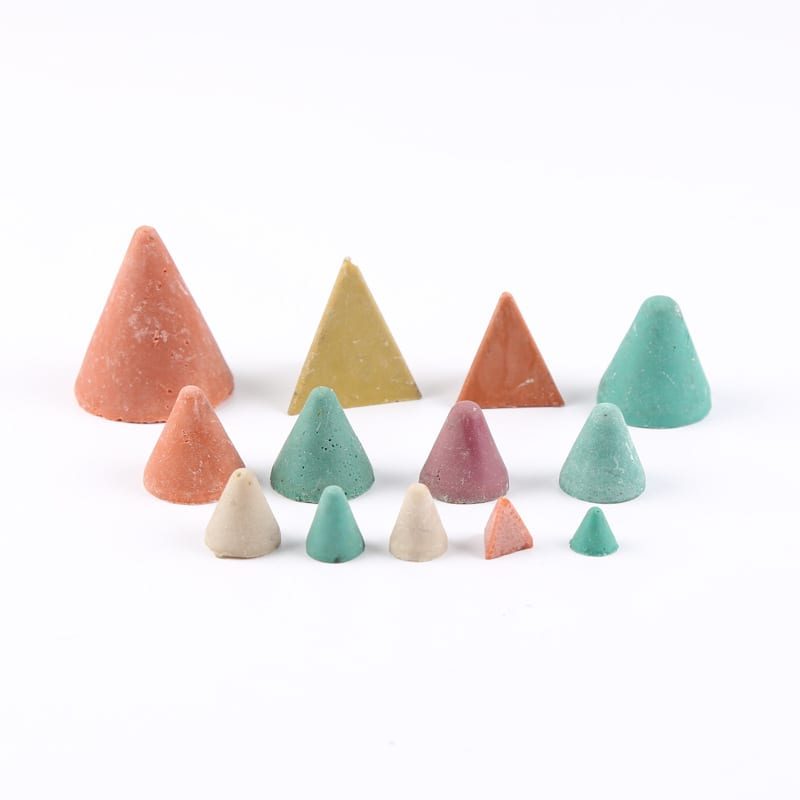
Preformed ceramic triangles and angle-cut cylinders paired with LC10 (or MC8 for oxide scale) strip sharp stamping burrs, round 90-degree edges, and leave a crisp, non-directional matte satin skin—ideal for powder coating, wet painting, or industrial hardware.
Tier 2: Fine Resin-Bonded Plastic Pre-Polish (Low-Ra Soft Alloys)
Lightweight resin-bonded plastic cones paired with neutral LC10 or JTS5 erase fine CNC milling cusps on 6061 aluminum, brass, and zinc die castings without edge bruising—leaving a silky smooth matte surface ready for Type-II/Type-III anodizing or final brightening.
Tier 3: Non-Abrasive Porcelain Isotropic Plateau (Drivetrain & Bearing Surfaces)
High-alumina porcelain spheres or cylinders wipe microscopic peak crests flat (aided by conversion chemistry on hardened steel or neutral flow on aluminum) while preserving micro-valleys for hydrodynamic oil retention across motorsport gears and connecting rods.
Tier 4: Cold-Worked Mirror Compression (Steel Balls & Dry Organic Media)
Smooth stainless steel burnishing balls with PL10—or dry walnut shell and wood pegs charged with polishing cream—compress already-smooth peaks into bright, reflective showroom luster on 304 stainless cutlery, brass fittings, gold, and acrylic edges.
| Surface Finish Tier | Primary Media Type | Compound Chemistry | Typical Downstream Use |
|---|---|---|---|
| Matte Satin Deburr | Preformed ceramic triangles / cylinders | LC10 / MC8 flow-through |
Powder coating, structural brackets, hydraulic blocks |
| Silky Pre-Plate Matte | Resin-bonded plastic cones / pyramids | Neutral LC10 / JTS5 |
Anodizing prep, electroplating prep, die-cast housings |
| Isotropic Plateau | Non-abrasive high-alumina porcelain | Steel conversion + LC10/PL10 |
Transmission gears, camshafts, bearing races |
| Reflective Mirror Gloss | 304 steel balls/pins or dry walnut/cob |
PL10 wet or dry polishing cream |
Cutlery, wheel trim rings, jewelry, eyewear, acrylic |
[DESIGN: Visual roughness-to-gloss progression chart mapping starting CNC/stamped texture across four mass finishing tiers]
Why One Media Grade Cannot Jump Straight From Rough Burrs to Mirror Gloss
Shops trying to save capital by running a single stage almost always hit an unavoidable physical wall.
[DESIGN: Microscopic peak-and-valley diagram contrasting rough cutting vs non-abrasive ball burnishing]
Coarse Ceramic Cuts Fast Yet Leaves Micro-Scratches
Aggressive aluminum-oxide ceramic stones shear metal burrs rapidly, yet their embedded abrasive grains continuously carve microscopic valleys. Leaving parts longer in ceramic media never turns matte metal into a mirror—it simply keeps renewing a uniform matte cut.
Steel Balls Shine Bright Yet Cannot Erase Deep Tool Marks
Because 304 stainless steel balls and non-abrasive porcelain carry zero cutting grit, running raw CNC-milled parts straight in steel burnishing media merely shines the tops of rough tool ridges—leaving wavy, bright-yet-rough "orange peel" glare.
The Two-Stage Rule for Lowering Ra and Raising Reflectivity
Achieving true low-Ra mirror tumbling surface finish requires two disciplined steps: Stage 1 abrasive cutting (ceramic or plastic) to level every directional burr and scratch into uniform fine matte, followed by Stage 2 non-abrasive burnishing (porcelain, steel balls, or dry walnut/cob) to flatten and shine those uniform micro-peaks.
How Chamber Physics Shapes Surface Finish Uniformity
The exact same media charge produces very different surface textures depending on which machine drives it.

Circular Vibratory Bowls for Consistent All-Around Rolling Finish
PU-lined vibratory grinders circulate media and parts continuously in a gentle toroidal roll—preventing heavy free-fall denting while maintaining steady fresh-water LC10 flow-through so metallic fines never glaze media stones.
Divided Rectangular Troughs and Fixtured Drag Finishers for Zero-Collision Finish
Heavy forged shafts, precision billet gears, and long aluminum rails pick up unsightly impact nicks if tumbled loose together. Divided rectangular troughs (one part per PU bay) and fixtured drag finishers deliver the highest cosmetic finish consistency on collision-sensitive parts.
Centrifugal Disc Finishers for Compact High-Energy Smoothing
Centrifugal disc finishers apply intense toroidal shear that compresses Stage 1 cutting cycles sharply on compact rigid parts—producing tight, uniform micro-matte finishes quickly where parts resist bending.
Octagonal Rotary Barrels for Heavy Cascade Cut and Dry Organic Gloss
Octagonal rotary barrels excel at rugged wet hardware batching and quiet multi-tier dry wood-peg or walnut-shell polishing—delivering warm, smooth optical clarity across acrylic, eyewear, and brass.
| Machine Platform | Impact Energy Profile | Part-on-Part Nick Risk | Best Finish Control Role |
|---|---|---|---|
| Fixtured Drag Finisher | High shear, spindle-controlled | Zero | Precision low-Ra isotropic & mirror billet parts |
| Divided Rectangular Trough | Medium-high vibratory | Zero | Long rails, connecting rods, heavy gears |
| Circular Vibratory Bowl | Continuous gentle toroidal roll | Low-Medium | High-volume brackets, cutlery, castings |
| Centrifugal Disc Finisher | Intense compact vortex | Medium-High | Rapid cutting on sturdy compact parts |
| Octagonal Rotary Barrel | Gravity cascade slide | Medium (wet) / Low (dry) | Heavy steel batching & dry organic gloss |
[DESIGN: Machine-to-finish selection matrix matching part collision sensitivity and target Ra/gloss across five platforms]
Controlling Surface Finish Across Different Metal and Polymer Alloys
Material hardness and chemical reactivity dictate which media and compound pair cleanly without surface damage.
Carbon Steel and Cast Iron
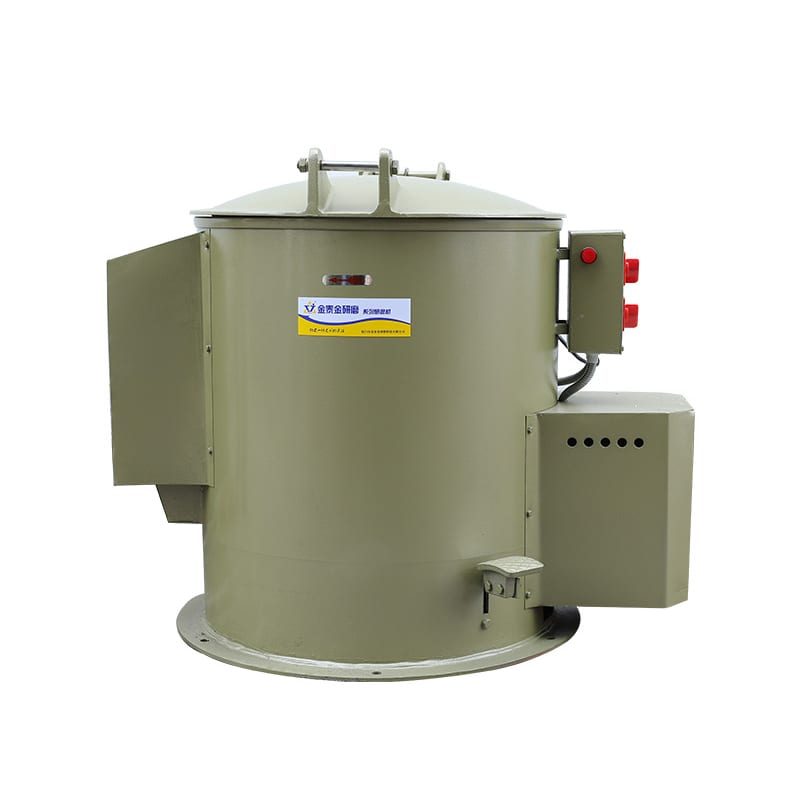
Start with dense preformed ceramic media and LC10 (or MC8 for heavy mill scale), flush cleanly with rust-inhibiting JTJ50, and spin-dry hot immediately in a centrifugal dryer so bare steel never flash-rusts.
Austenitic 304 Stainless Steel
Level weld seams and stamping marks first with ceramic media (LC10/MC8), then transfer clean parts into blended 304 stainless steel balls, cones, and satellites with PL10 burnishing compound—followed by heated corncob drying for spotless mirror clarity.
Aluminum 6061 / 7075 and Die-Cast A380
Never drop heavy steel balls or aggressive ceramic onto thin aluminum, and never run high-pH soaps. Use lightweight resin-bonded plastic cones with neutral LC10 or JTS5 flow-through, optionally followed by clean high-alumina porcelain spheres for brighter satin finish prior to anodizing.
Brass, Copper, and PMMA Acrylic
Brass brightens rapidly in dry cream-charged walnut shell or wet PL10 magnetic pin/steel-ball runs, while cut PMMA acrylic relies strictly on dry wood/bamboo pegs charged with polishing cream after optional wet plastic pre-cut.
Compound Chemistry, Water Flow, and Drying Impact on Final Appearance
Even flawless media selection fails if dirty process water or hard mineral drying stains the finished skin.
Steady Flow-Through Prevents Stone Glazing and Gray Slurry
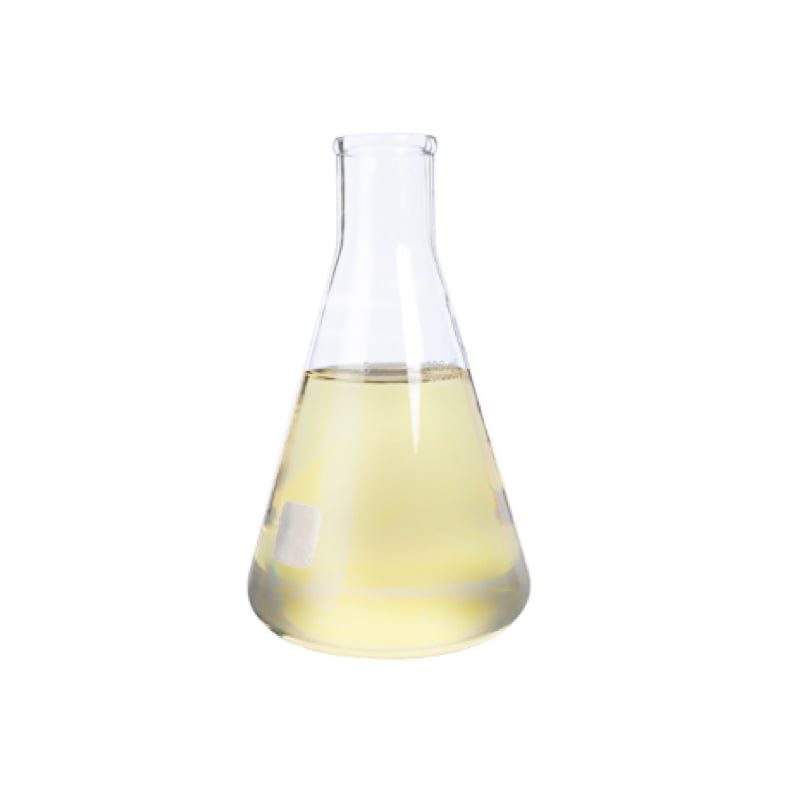
Closed recirculating tanks load water with oily coolant residue and fine metallic mud—glazing ceramic stones smooth and dulling bright metal surfaces. Steady fresh-water and LC10/JTS5 flow-through carries abraded fines straight out of the drain screen.
Softened Rinse Water and Heated Spin-Drying Eliminate Water Spots
Letting hard tap water air-dry inside concave spoon bowls or machined pockets leaves chalky calcium rings over newly polished surfaces. Flush parts with clean softened water and move straight into heated centrifugal spin-drying or warm corncob wiping.
Pre-Degreasing Oily Parts Protects Every Stage
Cutting oil carried off CNC lathes ruins both Stage 1 ceramic bite and Stage 2 PL10 mirror burnishing. Always pre-degrease oily parts cleanly before loading the finishing chamber.
Common Failure Modes That Ruin Tumbling Surface Finish
Watch for these four shop-floor defects when qualifying a new finishing recipe.
[DESIGN: Defect troubleshooting gallery showing orange-peel peening, stray-grit scratches, dark aluminum smut, and hard-water spotting]
Stray Coarse Ceramic Grit Scratching Mirror Burnished Parts
A single chipped Stage 1 ceramic piece carried inside a hollow bore into the Stage 2 steel burnishing bowl carves fresh scratches across the entire batch. Keep cutting and burnishing chambers strictly separated.
"Orange Peel" Dimpling From Heavy Steel Balls or Over-Aggressive Ceramic
Oversized steel balls without sufficient PL10 cushioning—or heavy ceramic on soft aluminum—hammer microscopic craters onto flat surfaces. Step down media mass, raise PL10 lubrication, or switch soft alloys to plastic cones.
Uneven Finish Between Outer Edges and Recessed Pockets
If outer corners brighten while internal pockets stay dull matte, media pieces are bridging over pocket openings. Blend smaller cones, pins, or angle-cut cylinders into the charge (checking non-lodging slot clearances) or run internal cross-bores in an OBD magnetic tumbler.
Dull Dark Charcoal Smut on Aluminum or Un-Neutralized Steel Gears
High-pH soaps etch aluminum black, while skipping alkaline LC10/PL10 neutralization leaves steel isotropic gears matte slate-gray. Match chemistry strictly to alloy family.
Skipping Undersize Media Screening Between Batches
Worn-down ceramic triangles gradually shrink to the exact width of tapped bores and cooling louvers. If undersized fragments wedge inside holes, surrounding metal edges stay unpolished while operators waste shift hours picking jammed chips out of finished batches.

Honest Boundaries: What We Do and Do Not Supply
At Xiamen Jin Tai Jin Grinding Technology Co.,Ltd. (brand: Jings Polish), our workshop roots date back to 1996 and our company was formally established in 2009, delivering over 200,000+ sets of grinding and polishing solutions worldwide. Across our catalogue, we manufacture 21 machine platforms backed by 24 granted Chinese IP rights (1 invention patent, 15 utility model patents, and 8 design patents), under ISO 9001 certification 00726Q01571R001 (valid 2026-06-03 to 2029-06-02) and CE certifications M.2023.206.C88121 (Vertical, 8 models) and M.2023.206.C88120 (Horizontal, 13 models), valid until 2028-07-24.
Machines, Media, and Compounds—Not Contract Tumbling Services
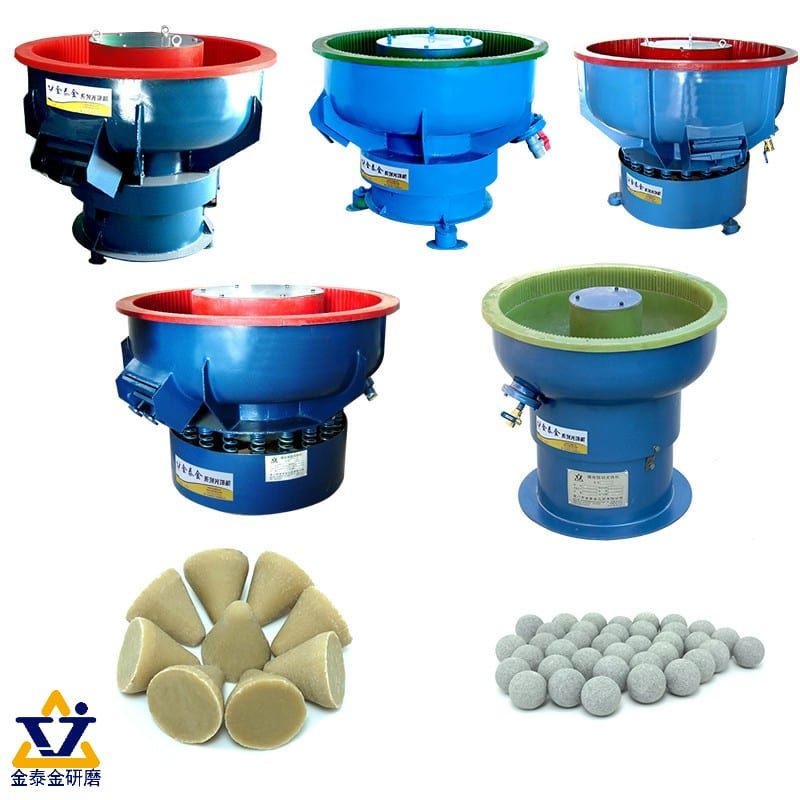
We build and supply vibratory bowls, divided rectangular troughs, drag finishers, centrifugal disc finishers, octagonal rotary barrels, OBD magnetic tumblers, heated dryers, tumbling media, and finishing compounds. We do not operate a contract job-shop finishing service. Standard machines ship in 25–35 days, while custom divided troughs and drag lines require 45–60 days.
No Electroplating, Anodizing, Sandblasting, or Hand Grinding Tools
We do not supply decorative chrome plating baths, Type-II/Type-III anodizing lines, dry sandblasting cabinets, or hand-held angle grinders. Mass finishing automates mechanical surface conditioning inside enclosed chambers—preparing parts cleanly for downstream coating or final assembly.
Engineering Review Before Recommending Finish Recipes
Because alloy grade, starting CNC/stamping roughness, narrowest hole/slot width, and target Ra or gloss govern media and chamber selection, we do not promise free mail-in sample trials or guarantee cycle times before inspecting your workpiece—send clear photos of your starting and target finish via our custom polishing solution page for an engineering assessment.
Buyer Checklist & FAQ for Tumbling Surface Finish
Review these practical benchmarks before specifying surface finish requirements or buying equipment.
[DESIGN: Annotated tumbling surface finish enquiry checklist showing alloy, starting roughness, target finish tier, and slot dimensions]
Can tumbling surface finish achieve the exact same mirror clarity as hand-buffed chrome?
Two-stage ceramic cutting followed by PL10 stainless steel ball burnishing produces a deep, bright mechanical mirror finish across 304 stainless steel and brass without peeling risk—though bare burnished steel carries a slightly warmer natural metallic tone than electroplated decorative chrome and cannot cover deep unground casting porosity.
How do I specify a tumbling surface finish clearly on an engineering drawing?
Specify the measurable target—such as maximum burr height, edge break/radius range, target surface roughness (Ra) for matte/isotropic parts, or visual gloss sample comparison—rather than writing generic "tumble polish" notes.
Why did my aluminum parts lose brightness after switching from plastic cones to ceramic triangles?
Dense ceramic cuts aggressively yet leaves a rougher, darker matte-gray micro-texture on soft aluminum compared with lightweight resin-bonded plastic cones and neutral JTS5 brightening compound.
Can one vibratory bowl run both matte deburring and mirror burnishing?
Physically yes if drive springs support heavy steel media, yet swapping heavy media charges daily wastes shift hours and risks stray ceramic grit scratching mirror batches. Dedicated Stage 1 and Stage 2 chambers protect finish quality.
How does media-to-part volume ratio change tumbling surface finish consistency?
Lowering the media-to-part volume ratio to cram more parts into one batch forces metal parts to strike each other directly instead of rolling inside a protective cushion of stones or plastic cones. That part-on-part collision leaves random edge nicks and uneven patchy finish across flat faces, whereas a generous media ratio keeps every surface uniformly surrounded.
Why do CNC-machined 6061 aluminum brackets sometimes show lingering tool tracks even after porcelain polishing?
High-alumina porcelain spheres are non-abrasive—they brighten and smooth micro-peaks rather than cutting away deep ball-mill step-over ridges. Always run a thorough Stage 1 mechanical leveling pass with resin-bonded plastic cones and neutral LC10/JTS5 until CNC cusps are completely erased into uniform matte frost before moving to porcelain brightening.
Can tumbling surface finish improve paint or powder-coat adhesion on laser-cut steel?
Yes. Oxygen-cut laser edges carry brittle black oxide scale that causes powder coating to flake during bending or salt-spray exposure. Running ceramic cutting triangles with MC8 descaling compound strips laser oxide cleanly while rounding sharp 90-degree corners so electrostatic powder wraps smoothly around every edge.
What happens if brass or copper parts sit wet in open trays after PL10 steel ball burnishing?
Warm compound water trapped in brass recesses rapidly oxidizes exposed copper-zinc surfaces into dull brown tarnish spots and white mineral rings. Flush freshly burnished brass with clean softened water immediately upon unload and pass parts straight through a heated vibratory corncob dryer or centrifugal spin-dryer.
How do I keep delicate external threads from flattening while smoothing neighboring forged shoulders?
Avoid running threaded parts loose inside open circular bowls or rotary barrels with heavy ceramic media. Instead, clamp each component on a fixtured drag-finishing spindle, isolate parts individually inside a divided rectangular vibratory trough, or cap exposed threads with reusable protective sleeves beforehand.
Why do flat stamped washers sometimes emerge with bright edges and dull matte centers?
Flat stamped hardware traps thin films of compound water between adjacent parts and rides through the vibratory bowl as stacked pairs—blocking media contact across the hidden inner faces. Raise the media-to-part volume ratio, keep water flow moderate rather than flooded, and feed flat stampings evenly onto the moving media crest so ceramic or steel media wedges every washer apart.
Can an OBD magnetic tumbler produce a true mirror finish on 304 stainless steel blocks?
A wide-table OBD magnetic tumbler with 304 stainless pins and PL10 burnishing compound produces bright, uniform satin-to-semi-mirror luster rapidly inside deep cross-holes, narrow cooling fins, and recessed pockets where larger media cannot enter. For ultra-high showroom mirror reflectivity on broad external faces, follow magnetic pin deburring with a dedicated vibratory bowl charged with larger 304 steel balls and cones.
How does cast polyurethane chamber lining protect surface finish quality?
Thick poured-cast polyurethane absorbs heavy part-on-wall impacts cleanly—preventing edge bruising on aluminum and brass while isolating non-ferrous alloys from bare carbon-steel tank rust. Intact polyurethane linings also reduce shop floor noise significantly during continuous production shifts.
When is dry corncob or walnut-shell finishing better than wet vibratory burnishing?
Dry organic media (walnut shell, corncob, hardwood pegs) excels whenever parts cannot tolerate water spotting or chemical staining—including acrylic edges, gold and silver jewelry, eyewear frames, and final moisture-wicking on freshly rinsed 304 cutlery.
Why do forged steel wrenches or brackets show uneven gloss after tumbling in a single ceramic charge?
Forged carbon-steel hardware often carries patchy heat-treat scale alongside smooth forged flats. Without adding MC8 descaling compound during Stage 1 ceramic cutting, hard black oxide patches resist cutting while bare steel areas abrade rapidly—leaving a mottled, two-tone surface. Stripping scale uniformly first guarantees consistent matte or burnished finish across the entire forging.
How can a machine shop lower surface roughness on delicate aluminum optical mounts without edge rounding?
Minimize Stage 1 cutting dwell time by tuning CNC ball-nose step-over feeds upstream, then run lightweight resin-bonded plastic cones with neutral JTS5 or LC10 inside a cushioned divided trough or fixtured drag finisher. Keeping media mass light and cycle duration controlled levels fine tool cusps cleanly while preserving crisp optical mounting edges and tight datum flatness across every bracket.
What details should I share before requesting a quote for surface finish equipment?
Send clear photos of your raw parts alongside an example of your target finish (matte, pre-anodize satin, isotropic plateau, or mirror), alloy grade, part envelope dimensions and weight, narrowest slot or hole size, and hourly batch target via our custom polishing solution page. Also note whether oily machining residue or laser oxide scale is present before loading, whether any precision bores or external threads require masking, and whether downstream anodizing, plating, or powder coating follows. Our engineers will configure the right vibratory bowl, divided trough, fixtured drag finisher, or rotary barrel chamber, non-lodging media progression, LC10/MC8/PL10 compound recipe, and heated centrifugal or corncob drying station tailored reliably to your shop floor, alloy mix, and daily batch throughput to deliver consistent edge radius, low surface roughness, and spotless gloss on every shift.
 +86-592-2381506


 IPv6 network supported
