
Metal Edge Rounding in Production: Controlling Uniform Chamfer Radius on Stamped, Laser-Cut, and CNC Parts
Sheet-metal fabricators, precision stampers, and CNC job shops searching for metal edge rounding are usually solving a costly downstream problem: laser-cut brackets and punched plates pass dimensional checks yet slice operator gloves, chip powder coating along razor-sharp 90-degree corners, or fail incoming safety and fatigue inspections because manual flap-disc grinding cannot hold a uniform edge radius across hundreds of parts.
The central thesis of this guide is clear: predictable metal edge rounding balances chamber kinetic energy against media mass and cutting geometry—using high-density ceramic media inside vibratory bowls, centrifugal disc finishers, or rotary barrels for tough steel and stainless edges, while stepping down to lightweight resin-bonded plastic cones and neutral chemistry for thin aluminum and tight-tolerance machined components. Controlling dwell time and non-lodging media sizing turns sharp sheared edges into consistent, coating-ready radii without eroding critical flat faces. For related edge workflows, see our metal edge finishing guide, sheet metal deslagging guide, and vibratory grinder guide.
Why Sharp Cut Edges Fail Coatings, Safety Audits, and Fatigue Tests
Even a completely burr-free laser-cut or CNC-milled corner still carries a sharp 90-degree edge that creates three immediate manufacturing headaches.

Powder Coating and Paint Pull-Back on Razor Edges
Liquid paint and electrostatic powder coating naturally pull away from sharp 90-degree corners during oven curing due to surface tension—leaving thin, exposed bare-metal edges that rust first under salt-spray and humidity testing. Uniform metal edge rounding gives coatings a smooth curved shoulder to wrap around cleanly.
Operator Laceration Hazards and Assembly Wire Chafing
Stamped enclosure cutouts, electrical chassis plates, and automotive mounting brackets slice operator hands during assembly and chafe wiring harnesses over time. Hand-filing every cutout edge creates wildly inconsistent chamfers while burning huge skilled labor hours.
Edge Stress Concentration and Notch Sensitivity
Sharp sheared corners on spring-steel clips, aerospace brackets, and structural linkages act as mechanical stress concentrators. Smooth, uniform radiusing eliminates micro-tears left by punching dies and raises cyclic fatigue durability without manual handwork.
| Upstream Cut Method | Typical Edge Defect | Edge Rounding Priority | Recommended First-Pass Media |
|---|---|---|---|
| Fiber laser cutting | Razor 90-degree corners + brittle oxide dross |
Strip oxide scale + uniform coating radius | Dense ceramic triangles + LC10 / MC8 |
| Turret punching / stamping | Sharp rollover burr on exit face | Shear burr + smooth safety radius | Preformed ceramic angle-cut cylinders + LC10 |
| CNC milling / turning | Fine exit burrs + sharp tool corners | Controlled micro-radius without face erosion | Fine ceramic (steel) or plastic cones (aluminum) |
| Plasma / oxy-fuel cutting | Heavy slag & heat-affected oxide | Deslagging + heavy edge blending | Heavy high-alumina ceramic + MC8 descaler |
[DESIGN: Four-panel comparison of sharp laser edge with paint pull-back, stamped rollover burr, hand-ground uneven bevel, and uniform tumbled radius]
Matching Equipment Platforms to Part Size, Flatness, and Target Radius
Chamber physics governs how aggressively media strikes exposed corners versus flat surfaces—and whether parts bend or collide.

Circular Polyurethane-Lined Vibratory Bowls for Medium Brackets and Stampings
For most stamped brackets, laser-cut gussets, and machined hardware, a PU-lined vibratory grinder delivers steady, repeatable edge rounding with built-in screen separation. Continuous LC10 fresh-water flow-through flushes abrasive fines out of the chamber so parts emerge bright and clean.
Centrifugal Disc Finishers for Rapid Radiusing on Compact Rigid Parts
When throughput targets demand faster edge rounding on thick washers, sintered gears, or compact stainless brackets, a centrifugal disc finisher multiplies contact pressure via high-speed toroidal vortex flow—cutting edge radius cycles sharply compared to standard bowls while keeping small parts cushioned in dense media.
Divided Rectangular Vibratory Troughs for Long Rails and Heavy Plates
Long CNC rails, oversized electrical enclosure frames, and heavy thick-plate weldments bridge across narrow circular bowls and dent neighboring pieces. A rectangular vibratory trough with removable polyurethane-lined dividers isolates each long part in its own bay while rounding outer edges evenly along the entire length.
Octagonal Rotary Barrels for Heavy Batch Radiusing on Sturdy Forgings
When rugged batch simplicity outweighs automated screen unloading—such as thick forged hooks, heavy chain links, and sturdy carbon-steel brackets—an octagonal rotary barrel delivers deep, consistent edge rounding via continuous cascading slide action.
| Machine Platform | Edge Rounding Speed | Collision & Dent Risk | Best Part Profile |
|---|---|---|---|
| Centrifugal Disc Finisher | Fastest (high-energy shear) | Medium-High (rigid parts only) | Compact thick stampings, sintered blocks, small brackets |
| Circular Vibratory Bowl | Medium-Fast (continuous roll) | Low-Medium (with proper media ratio) | Medium sheet-metal brackets, housings, clips |
| Divided Rectangular Trough | Medium-Fast | Zero part-on-part collision | Long rails, heavy plates, fragile machined frames |
| Octagonal Rotary Barrel | Moderate | Medium (cascade drop) | Heavy forgings, thick hardware, batch steel parts |
[DESIGN: Selection flowchart matching part length, wall thickness, and hourly batch target to centrifugal disc, vibratory bowl, divided trough, or barrel]
Ceramic vs. Plastic Media Geometry for Controlled Edge Radiusing
Media density, abrasive grit content, and physical shape control how fast an edge rounds—and whether media lodges inside internal cutouts.

Preformed High-Density Ceramic Triangles and Angle-Cut Cylinders
Ceramic media combines high mass with sharp cutting edges, delivering rapid metal edge rounding on carbon steel, 304 stainless steel, and titanium. Angle-cut cylinders and tri-star shapes reach smoothly into corner notches, whereas simple triangles cover broad external perimeters reliably.
Resin-Bonded Plastic Cones for Aluminum, Brass, and Thin Stampings
Dropping heavy ceramic media onto 6061 aluminum brackets or thin brass stampings dents flat faces and bends slender tabs before corners reach the desired radius. Low-density resin-bonded plastic media cushions soft alloys while still cutting clean, uniform micro-radii along sheared edges.
Non-Lodging Sizing Rules for Louvers, Slots, and Mounting Holes
Sheet-metal brackets carry cooling louvers, obround mounting slots, and tapped holes. Always size your ceramic or plastic shapes strictly larger than the widest slot—or small enough to pass straight through freely—and screen out worn undersized fragments regularly so broken tips never jam inside mounting holes.
Why Steel Burnishing Balls Cannot Round Sharp Edges
Smooth stainless steel burnishing media compresses and shines metal surfaces without removing material; running steel balls over a sharp razor-cut edge simply polishes the sharp burr flat rather than cutting a uniform radius. Always complete edge rounding with ceramic or plastic cutting media first.
Compound Chemistry and Laser Oxide Scale Removal
Edge rounding speed drops dramatically if laser oxide scale or oily cutting fluid coats the media stones.

Stripping Laser Oxide Dross With MC8 and Ceramic Media
Nitrogen-cut stainless leaves clean bright edges, whereas oxygen-cut carbon steel and heavy mill-scale plate carry hard, brittle black oxide along the kerf edge. Pairing sharp ceramic triangles with MC8 descaling compound softens and strips brittle oxide scale so both the edge radius and clean bare metal emerge uniform for powder coating.
Keeping Ceramic Stones Sharp With LC10 Flow-Through
Running a closed recirculating sump loads water with oily sludge and fine abrasive mud that glazes ceramic media smooth—halting edge cutting halfway through the shift. Maintain steady fresh-water and LC10 flow-through (and pre-degrease oily stamped parts beforehand) so ceramic surfaces stay crisp and aggressive.
Neutral Chemistry and Softened Rinse for Aluminum Edge Rounding
Always run aluminum brackets exclusively with neutral LC10 or JTS5 chemistry rather than high-pH alkaline soaps that etch alloy grain boundaries dark gray. Follow with clean softened water rinsing and immediate heated spin-drying to prevent mineral spotting before powder coating or anodizing.
Protecting Flat Faces, Threads, and Tight Dimensional Tolerances
Controlling edge rounding means hitting the target corner radius without ruining neighboring precision features.
[DESIGN: Diagram showing uniform corner radius control vs over-rounded precision hole edges and battered external threads]
Balancing Cycle Duration Against Critical Hole Tolerances
Every extra round of aggressive ceramic tumbling removes slight material from flat faces and widens chamfered precision bores. Measure edge radius progression at regular intervals during initial setup so operators run the shortest reliable cycle needed to meet coating or safety specs.
Preventing Wet Sheet-Metal Sticking ("Shingling") in Bowls
Flat laser-cut plates stick face-to-face in wet vibratory bowls due to water surface tension, leaving outer edges rounded unevenly while inner mating faces never see media. Raise the media-to-part volume ratio, moderate water flow, and feed flat stampings gradually onto the moving media crest.
Isolating Threaded Studs and Press-Fit Pins
If sheet-metal assemblies carry pressed-in PEM studs or delicate external threads before edge rounding, heavy bulk tumbling will batter thread crests flat. Either round blank plates before hardware insertion, cap studs with protective sleeves, or run parts inside divided compartments.
Managing Media Attrition and Screening Intervals on Laser-Cut Steel Lines
Sharp oxygen-cut laser oxide edges wear ceramic triangles down steadily over multi-shift operation. Without periodic screening to purge undersized broken chips, worn ceramic fragments wedge inside small mounting holes and slow down the tumbling cascade. Establish a simple shift check to screen out undersized media and top up fresh triangles so cutting rate and edge radius stay consistent week after week.

Common Failure Modes in Metal Edge Rounding
These four recurring shop errors explain why edge rounding batches occasionally fail inspection.
[DESIGN: Troubleshooting gallery showing flat-plate sticking, glazed ceramic stones, lodged triangle tips, and flash-rusted carbon steel]
Uneven Radius Between Outer Perimeter and Internal Cutouts
If outer bracket edges round nicely while internal square cutouts stay sharp, the selected ceramic triangles are too large to circulate smoothly inside the internal cutout. Switch to smaller angle-cut cylinders or slim tri-star ceramic shapes that pass freely through internal windows while clearing mounting holes.
Cutting Speed Collapses Mid-Shift
Oil carryover from stamping presses or dirty recirculated water glazed the ceramic charge. Degrease oily stampings first and verify steady fresh-water LC10 flow-through at the drain screen.
Orange Flash Rust on Freshly Rounded Carbon Steel
Bare carbon-steel brackets emerging from wet ceramic cutting rust within hours if left damp in tote bins. Always run a final rust-inhibiting rinse and move steel batches straight into a heated centrifugal dryer before staging for powder coating.
Bent Thin Brackets Inside High-Energy Centrifugal Discs
Thin-gauge stampings bend when thrown into high-speed centrifugal disc vortexes. Move thin, flexible sheet-metal profiles into cushioned circular vibratory bowls or divided rectangular troughs with gentle plastic or light ceramic media.
Honest Boundaries: What We Do and Do Not Supply
At Xiamen Jin Tai Jin Grinding Technology Co.,Ltd. (brand: Jings Polish), our workshop roots date back to 1996 and our company was formally established in 2009, delivering over 200,000+ sets of grinding and polishing solutions worldwide. Across our catalogue, we manufacture 21 machine platforms backed by 24 granted Chinese IP rights (1 invention patent, 15 utility model patents, and 8 design patents), under ISO 9001 certification 00726Q01571R001 (valid 2026-06-03 to 2029-06-02) and CE certifications M.2023.206.C88121 (Vertical, 8 models) and M.2023.206.C88120 (Horizontal, 13 models), valid until 2028-07-24.

Equipment, Media, and Compounds—Not Contract Edge Rounding
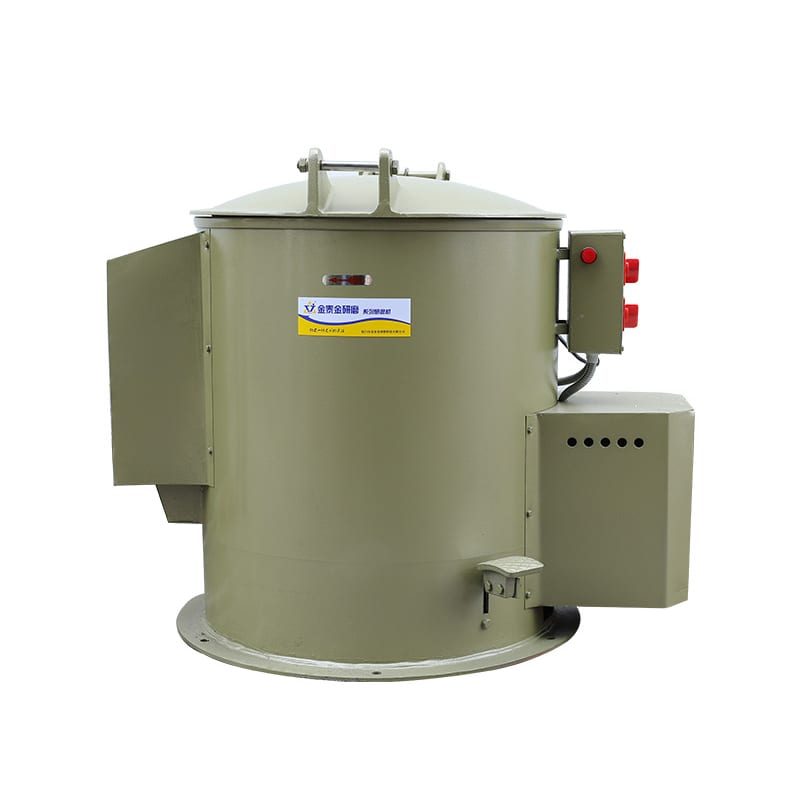
We engineer and manufacture vibratory bowls, divided rectangular troughs, centrifugal disc finishers, octagonal rotary barrels, heated dryers, ceramic/plastic media, and compounds for fabrication shops and OEMs. We do not provide contract job-shop edge rounding services. Standard machines ship in 25–35 days, while custom divided troughs and automated lines require 45–60 days.
No Dry Rotary Brush Belt Machines, Hand Angle Grinders, or Sandblasting Cabinets
We do not supply wide-belt dry brush deburring sanders, hand-held angle grinders, flap-disc tools, or dry abrasive sandblasting cabinets. Our systems perform automated wet and dry mass finishing inside enclosed tumbling chambers—ideal when you need all-around 360-degree edge rounding across stamped, laser-cut, and 3D CNC parts rather than flat-sheet-only belt sanding. For rough casting and precision smoothness comparisons, see our superfinishing guide and complex metal parts guide.
Candid Engineering Assessment Before Machine Sizing
Because part thickness, alloy (steel vs. aluminum), slot widths, and target edge radius govern whether a vibratory bowl, centrifugal disc, or divided trough works best, we do not promise free mail-in sample trials or guarantee cycle times before inspecting your workpiece—send clear photos of your cut edges, slot dimensions, and hourly output via our custom polishing solution page for an engineering assessment.
Buyer Checklist & FAQ for Metal Edge Rounding
Review these practical benchmarks before specifying automated edge-rounding equipment.
[DESIGN: Annotated metal edge rounding enquiry checklist showing alloy, plate thickness, smallest slot width, and hourly throughput]
Can mass finishing round internal cutout edges as well as outer perimeters?
Yes—as long as the selected ceramic or plastic media shape is compact enough to flow freely through internal cutouts without lodging, wet vibratory and centrifugal chambers round both internal cutout edges and external perimeters simultaneously.
Does metal edge rounding remove heavy plasma slag or thick torch dross?
No. Mass finishing strips light laser oxide scale (MC8 + ceramic) and uniform punching burrs, whereas thick welded plasma dross or heavy torch slag must be knocked off mechanically upstream before loading parts into the finishing bowl.
Should I round metal edges before or after welding brackets into larger frames?
Always round edges on individual stamped or laser-cut brackets before welding them into oversized assemblies that will no longer fit inside a finishing chamber.
Can one vibratory bowl handle both laser-cut carbon steel and 6061 aluminum brackets?
Only if you run strictly separated ceramic (for steel) and plastic (for aluminum) media charges, clean the polyurethane bowl thoroughly between alloy switches, and keep neutral aluminum chemistry (LC10/JTS5) completely isolated from steel descaling runs.
How do I keep thin stainless steel sheet-metal brackets from warping during edge rounding?
Long, narrow thin-gauge stampings bend when overloaded inside high-energy centrifugal discs or deep rotary drums. Move thin sheet-metal brackets into a cushioned circular vibratory bowl or divided rectangular trough with a high media-to-part volume ratio, and switch from heavy ceramic triangles to lighter resin-bonded plastic cones if flat sections still deflect.
What is the fastest way to verify edge radius consistency across a production batch?
Check representative brackets from the first, middle, and last unload trays using a simple radius gauge or optical comparator, and run a gloved-hand wipe test along internal cutouts and outer corners. If outer corners pass while internal slots still snag, step down to a more compact non-lodging ceramic or plastic media shape.
Why does powder coating still chip on laser-cut steel corners even after vibratory edge rounding?
Two causes explain coating failure after edge rounding: either nitrogen/oxygen laser oxide scale was never stripped completely with MC8 descaling compound, or residual LC10 soap film dried onto the brackets without a clean water flush before oven curing. Ensure complete scale removal and thorough clean-water rinsing before spin-drying.
How much floor space and utility prep does a vibratory edge-rounding cell require?
Beyond three-phase electrical power for the vibratory drive motor, plan a clean fresh-water supply line for flow-through LC10 dosing, floor drainage routed through a multi-baffle sludge-settling tank to catch fine ceramic mud, and adjacent space for a heated centrifugal dryer so carbon-steel batches never sit wet.
Can automated mass finishing replace manual deburring on oversized structural weldments?
No. Oversized welded frames and long structural beams that exceed chamber envelope limits still require dedicated upstream or manual edge prep—whereas automated vibratory bowls, centrifugal discs, and divided troughs handle individual brackets, gussets, and plates cleanly before final weld assembly.
How do I choose between ceramic triangles and angle-cut ceramic cylinders for edge rounding?
Preformed ceramic triangles offer broad flat faces and sturdy points that deliver rapid edge rounding on thick stamped brackets and heavy laser-cut plates without fracturing easily. Angle-cut cylinders carry slanted elliptical faces that slip more smoothly into narrow corner notches, obround slots, and angled bracket flanges where wide triangles tend to bridge.
Does wet vibratory edge rounding leave brackets clean enough for immediate powder coating?
Wet ceramic cutting with LC10 flow-through leaves bare metal free of burrs and light shop oil, and pairing MC8 strips laser oxide scale cleanly. However, always flush finished brackets with clean fresh water, spin-dry immediately to stop flash rust, and follow your powder-coat line's standard pre-paint phosphate or wash pretreatment before oven curing.
Why do small stamped washers and flat clips sometimes stick to the polyurethane bowl wall?
Thin, lightweight flat parts carry high surface-area-to-weight ratios and cling to wet polyurethane walls when water flow is too low or compound foam becomes overly thick. Raising water flow slightly, keeping LC10 dosing balanced, and maintaining a full media charge sweeps light stampings right back into the rolling cascade.
How does centrifugal disc edge rounding compare with vibratory bowls on thick stainless steel brackets?
A centrifugal disc finisher generates far stronger contact shear against dense ceramic media, rounding tough 304 stainless steel corners significantly faster than a standard circular vibratory bowl while occupying less floor space. Reserve centrifugal disc units for compact, rigid brackets that resist bending, and keep long or thin sheet-metal panels inside cushioned vibratory bowls or divided rectangular troughs.
What details should I share before requesting a quote for metal edge rounding equipment?
Send clear close-up photos of your stamped, laser-cut, or CNC parts showing raw cut edges, overall part length/width/thickness, alloy grade, narrowest slot or hole size, and target hourly batch volume via our custom polishing solution page. Also mention whether parts require downstream powder coating, anodizing, or bare-metal assembly, whether laser oxide scale is present on cut edges, and whether any pressed-in studs or fragile threads need masking. Our engineers will recommend the right vibratory bowl, high-energy centrifugal disc finisher, or divided rectangular trough along with non-lodging ceramic or plastic media, LC10/MC8 flow-through chemistry, and heated centrifugal spin-drying equipment matched directly to your sheet-metal and CNC fabrication production line in a detailed engineering configuration reply.
 +86-592-2381506


 IPv6 network supported
