
Aluminum Oxide Tumbling Media in Production: Preformed Ceramic Bonds, Cutting Rates, and Blasting-Grit Boundaries
Manufacturing engineers and purchasing leads sourcing aluminum oxide media frequently run into a costly procurement mix-up: ordering bags of loose aluminum oxide blasting grit (brown or white fused alumina sand) meant for compressed-air sandblasting cabinets and pouring them into a wet vibratory bowl or rotary barrel—only to watch the fine loose powder pack into concrete-hard mud at the bottom of the tank and jam every drain screen.
The central thesis of this guide is clear: in industrial mass finishing, aluminum oxide tumbling media works exclusively as hard abrasive mineral grains locked inside preformed vitrified ceramic triangles, angle-cut cylinders, or resin-bonded plastic cones—never as loose blasting grit—allowing parts to slide cleanly through wet LC10 or MC8 flow-through for predictable deburring, descaling, and edge radiusing. Separating bonded tumbling media from loose air-blasting grit prevents clogged settling tanks, uneven part scratching, and destroyed polyurethane linings. For related media comparisons, see our tumbler media guide, glass bead vs aluminum oxide media guide, and abrasive polish vs burnishing guide.
Bonded Aluminum Oxide Tumbling Media vs. Loose Blasting Grit
Although both products share the same Al2O3 mineral hardness, their physical form dictates completely different machinery.
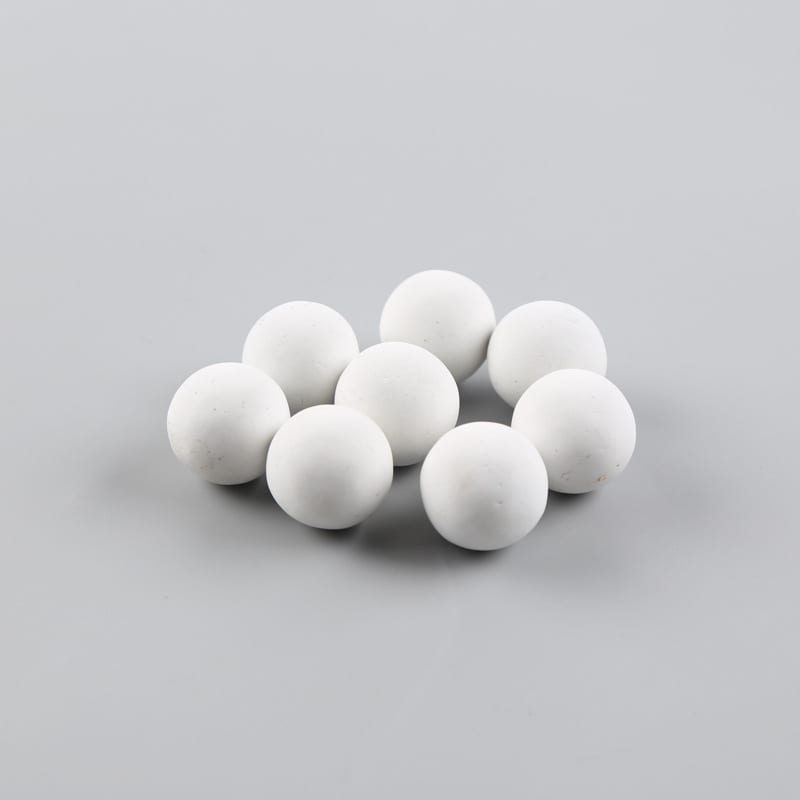
Why Loose Fused Alumina Powder Fails Inside Vibratory Bowls
Loose aluminum oxide blasting grit has zero structural shape to roll or cushion metal parts. When mixed with water inside a vibratory bowl, fine grit settles rapidly into a dense abrasive paste that plugs drain screens, stalls toroidal circulation, and embeds sharp grit particles into soft aluminum or brass skins.
Preformed Vitrified Ceramic Bonds for Steel, Stainless, and Titanium
Preformed ceramic media fires fine aluminum oxide abrasive grains inside a vitrified porcelain-clay matrix shaped into triangles, angle-cut cylinders, and tri-stars. As the ceramic binder slowly wears away in wet LC10 flow-through, fresh sharp alumina edges stay exposed to shear stamping burrs and strip laser oxide scale cleanly.
Resin-Bonded Plastic Media for Soft 6061 Aluminum and Zinc Castings
When heavy ceramic media would bruise 6061 aluminum or Zamak die castings, manufacturers embed finer abrasive grains inside lightweight resin-bonded plastic cones and pyramids. Plastic bonds deliver gentle aluminum oxide tumbling media leveling without "orange peel" denting.
| Media Format | Binder & Physical Form | Designed Equipment | Primary Failure if Misused |
|---|---|---|---|
Preformed Ceramic Media (Al2O3) |
Fired vitrified clay-alumina shapes | Wet vibratory bowls, centrifugal discs, barrels | Bruises soft aluminum; lodges in unmeasured slots |
| Resin-Bonded Plastic Cones | Lightweight polyester/urea resin shapes | Vibratory bowls, divided troughs, drag finishers | Cuts too slowly on heavy forged steel burrs |
| Non-Abrasive High-Alumina Porcelain | Dense Al2O3 ceramic with zero cutting grit |
Isotropic plateauing & bright finishing | Cannot remove heavy burrs or deep CNC marks |
Loose Blasting Grit (White/Brown Fused Alumina) |
Unbonded loose sand/powder | Dry air-blast cabinets (we do NOT supply) | Packs into mud & clogs wet vibratory drains |
Choosing Abrasive Aggressiveness: Fast-Cut vs. Fine-Finish Ceramic Grades
Not all preformed ceramic media cuts at the same rate; grit particle size and alumina concentration govern surface roughness and media wear.
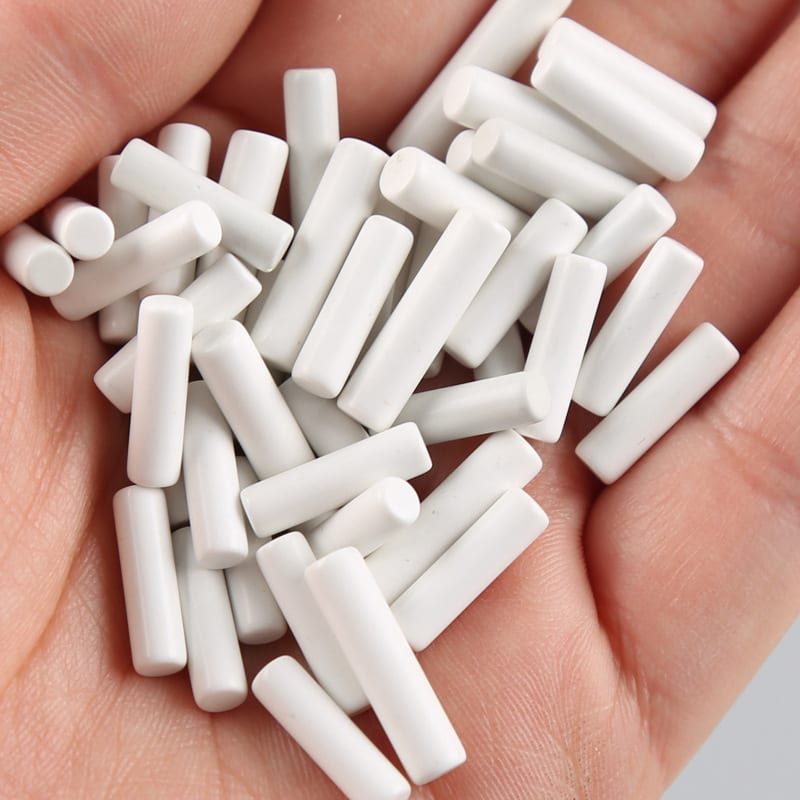
Heavy Fast-Cut Ceramic for Forging Flash, Mill Scale, and Thick Burrs
Coarse-grit, high-cutting ceramic shapes remove heavy stamping rollover burrs, mill scale, and oxygen-cut laser dross rapidly when paired with LC10 or MC8 descaling compound. Expect faster media wear and a crisp matte-satin surface suitable for powder coating or downstream burnishing.
Medium-Cut General Deburring Ceramic for Stamped & CNC Steel
General-purpose ceramic triangles and angle-cut cylinders balance steady burr removal with lower media attrition—producing uniform metal edge rounding across 304 stainless brackets, hydraulic manifolds, and mild-steel plates.
Light-Cut Fine Ceramic for Pre-Burnish Leveling
Fine-grit ceramic formulations erase light die draw lines and fine CNC tool marks cleanly, leaving a tight micro-matte surface ready for Stage 2 stainless steel ball burnishing (PL10) without requiring excessive burnish dwell time.
Non-Abrasive High-Alumina Porcelain (Zero Cutting Grit)
Even though high-alumina porcelain contains aluminum oxide chemically, it is sintered dense with zero sharp exposed cutting grit—functioning strictly as a non-abrasive wiping medium for isotropic finishing and gentle alloy brightening.
Non-Lodging Geometry: Triangles, Angle-Cut Cylinders, and Tri-Stars
Shape matters just as much as abrasive grit grade when parts carry cooling louvers, cross-holes, and narrow slots.
Preformed Triangles for Flat Plates and Broad Outer Perimeters
Triangles carry sturdy flat faces and durable corners that resist premature tip snapping—making them the workhorse geometry for general structural brackets, laser-cut gussets, and heavy forgings.
Angle-Cut Cylinders for Slotted Frames and Corner Fillets
Slanted elliptical faces let angle-cut cylinders slip cleanly into 90-degree weld fillets, obround mounting slots, and pocket corners where equilateral triangles bridge over empty space.
Tri-Stars and Cones for Intricate Castings and Recessed Pockets
Three-lobed stars and tapered cones reach deep into cast ribbing and stepped flanges while resisting flat-face sticking against sheet stampings.
The Slot-Clearance Rule Before Ordering Ceramic Media
Measure the narrowest hole, slot, and thread pitch on your drawing before ordering aluminum oxide tumbling media. Keep media strictly larger than every vulnerable opening—or small enough to pass straight through freely—and screen out worn undersized fragments regularly.
| Media Shape | Best Geometric Feature | Lodging Risk Watchout | Typical Wear Behavior |
|---|---|---|---|
| Equilateral Triangles | Broad outer edges, flat plates, heavy burrs | Tip can wedge in slots matching triangle thickness | Even face wear; tips round gradually |
| Angle-Cut Cylinders | Corner notches, obround slots, angled flanges | Diameter must clear circular cross-bores | Maintains slanted cutting edge well |
| Tri-Stars / Cones | Recessed cast ribs & stepped pockets | Lobes/tips require periodic chip screening | Wears slightly faster on narrow tips |
| Porcelain Spheres | Smooth gear teeth & low-Ra plateauing | Ball diameter must exceed oil-hole width | Negligible wear (non-abrasive) |
Equipment Platforms That Drive Aluminum Oxide Media Effectively
Chamber physics controls cutting speed, noise, and part-on-part collision protection.
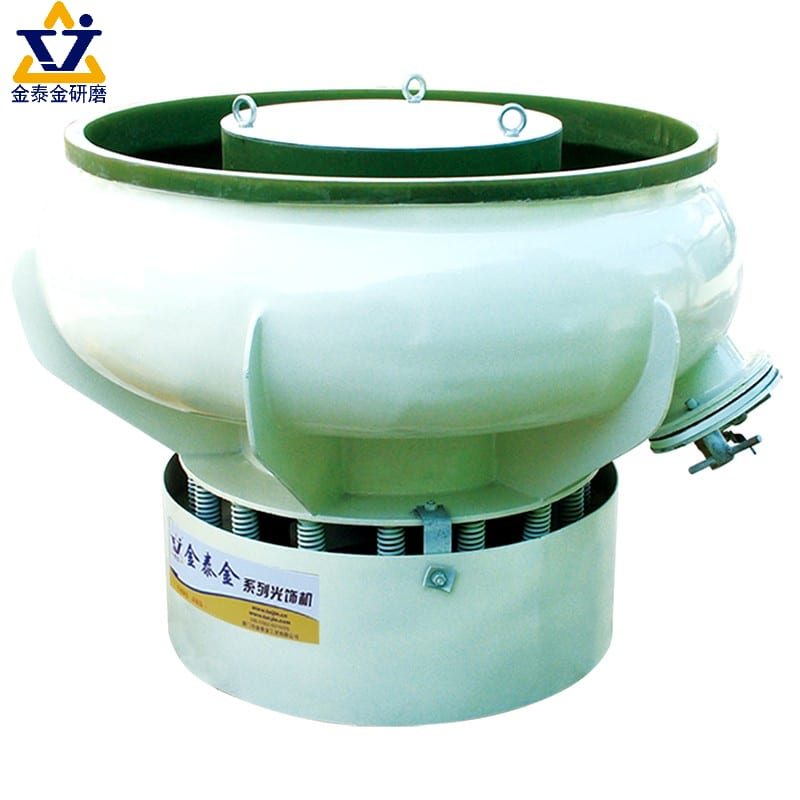
Circular Vibratory Bowls With LC10 Flow-Through
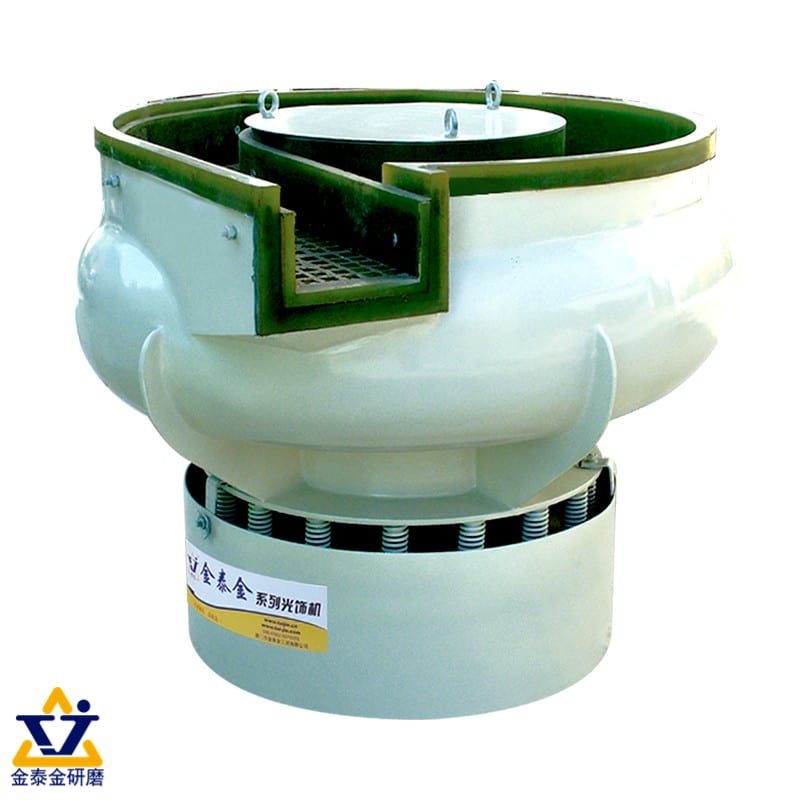
PU-lined vibratory grinders circulate ceramic stones in a continuous toroidal roll while fresh LC10 compound water flushes fine ceramic mud straight out of the drain screen—keeping stone pores open and sharp across entire shifts.
Centrifugal Disc Finishers for Rapid High-Energy Cutting
For compact, rigid steel and stainless components, centrifugal disc finishers drive ceramic media at high shear pressure—compressing deburring and edge-rounding cycles sharply in small floor footprints.
Divided Rectangular Troughs and Fixtured Drag Finishers
Long rails, heavy connecting rods, and precision gears collide violently in open bowls. Divided troughs isolate one part per polyurethane bay, while drag finishers clamp parts individually on rotating spindles for rapid zero-collision smoothing.
Octagonal Grinding Barrels for Quiet Batch Deburring
Octagonal grinding barrels provide rugged, quiet batch cutting for sturdy forgings and hardware—provided you pair them with external vibrating screen decks and multi-baffle settling tanks.
Compound Chemistry, Pre-Degreasing, and Settling Tank Discipline
Abrasive ceramic stones stop cutting the moment oil or dirty mud plugs their pores.
Pre-Degreasing Oily CNC and Stamped Parts First
Machining coolant and stamping lubricants glaze ceramic surfaces almost immediately—turning fresh sharp triangles into slick, useless stones. Pre-wash oily batches in warm alkaline cleaner before loading into ceramic media.
Pairing LC10 for Daily Cut vs. MC8 for Oxide Scale
LC10 suspends metallic fines and ceramic wear debris cleanly in steady drain flow, whereas MC8 adds targeted chemical descaling whenever thick furnace scale or laser oxide dross resists pure mechanical abrasion.
Multi-Baffle Settling Tanks Protect Shop Plumbing
Wet aluminum oxide tumbling media generates fine gray ceramic slurry as stones wear down. Routing drain hoses through a simple three-baffle settling tank traps heavy sediment cleanly before rinse water enters facility drains.
Common Failure Modes With Aluminum Oxide Tumbling Media
Watch for these four avoidable mistakes when commissioning a ceramic cutting cell.
Stones Glaze Smooth Halfway Through the Shift
Oil carryover from unwashed parts or dirty recirculated water clogged the ceramic pores. Pre-degrease parts and switch to steady fresh-water LC10 flow-through.
Broken Ceramic Tips Jam Inside Mounting Holes
Even properly sized triangles wear down over shifts until worn fragments match hole diameters. Screen working ceramic charges periodically to purge undersized chips.
Bruised "Orange Peel" Surfaces on Soft 6061 Aluminum
Dense ceramic triangles are too heavy for soft aluminum ribs and thin housings. Switch soft aluminum straight to lightweight resin-bonded plastic cones and neutral LC10/JTS5 chemistry.
Flash Rust on Carbon Steel After Ceramic Cutting
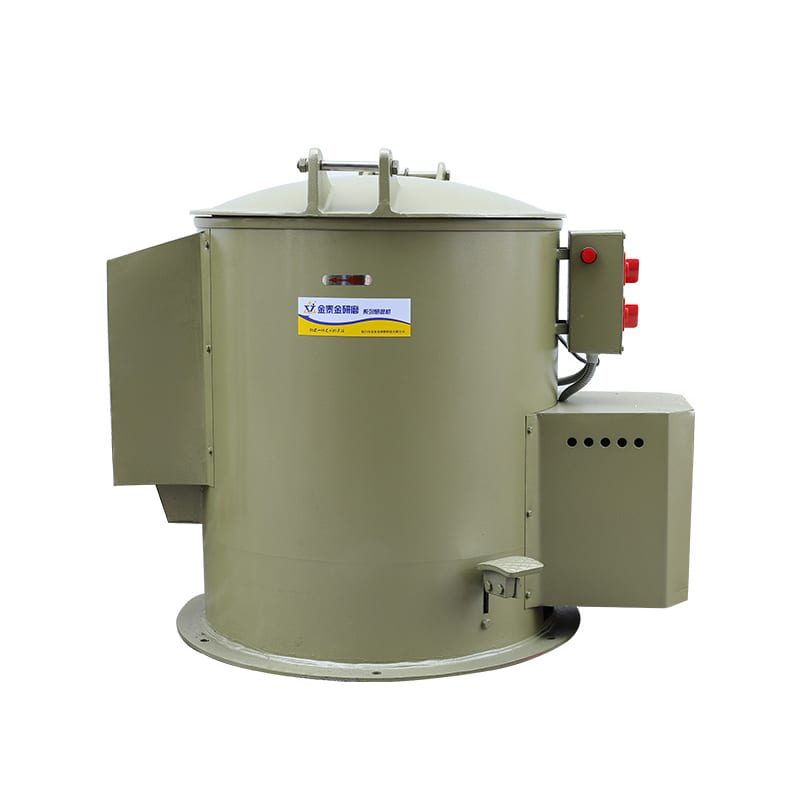
Freshly ground bare steel oxidizes fast in damp baskets. Follow ceramic cutting on carbon steel immediately with rust-inhibiting JTJ50 rinsing and heated centrifugal spin-drying.
Leaving Parts Inside Ceramic Media After Cycle End Without Flushing
Allowing parts to sit submerged in spent ceramic cutting mud inside a stopped vibratory bowl lets fine gray alumina slurry dry onto threads and recessed corners. Always flush finished parts cleanly over the separation screen as soon as the cycle ends.
Honest Boundaries: What We Do and Do Not Supply
At Xiamen Jin Tai Jin Grinding Technology Co.,Ltd. (brand: Jings Polish), our workshop roots date back to 1996 and our company was formally established in 2009, delivering over 200,000+ sets of grinding and polishing solutions worldwide. Across our catalogue, we manufacture 21 machine platforms backed by 24 granted Chinese IP rights (1 invention patent, 15 utility model patents, and 8 design patents), under ISO 9001 certification 00726Q01571R001 (valid 2026-06-03 to 2029-06-02) and CE certifications M.2023.206.C88121 (Vertical, 8 models) and M.2023.206.C88120 (Horizontal, 13 models), valid until 2028-07-24.
Bonded Mass Finishing Media & Machines—Not Loose Sandblasting Grit
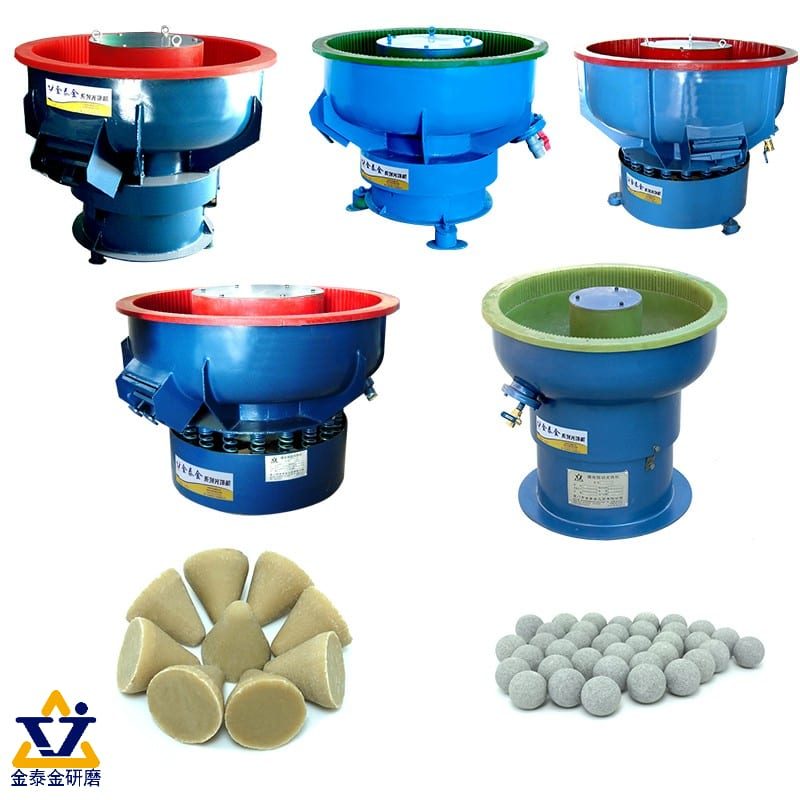
We manufacture and supply preformed aluminum-oxide ceramic media (triangles, angle-cut cylinders, tri-stars), non-abrasive high-alumina porcelain spheres, resin-bonded plastic cones, 304 stainless steel burnishing media, organic media, vibratory/barrel/centrifugal/drag/magnetic machines, heated dryers, and flow-through compounds (LC10, MC8, PL10, JTJ50, JTS5). We do not supply loose fused alumina sandblasting grit, dry air-blast cabinets, grinding wheels, or contract job-shop tumbling services. Standard machines ship in 25–35 days, while custom lines require 45–60 days.
Engineering Assessment Before Ordering Ceramic Media
Because alloy hardness, burr thickness, narrowest slot/hole width, and target surface finish dictate media grit grade and shape, we do not promise free mail-in sample trials or guarantee cycle times before inspecting your workpiece—send clear photos of your parts and slot dimensions via our custom polishing solution page for an engineering assessment.
Buyer Checklist & FAQ for Aluminum Oxide Tumbling Media
Review these practical benchmarks before ordering aluminum oxide media for tumbling equipment.
Can I pour loose white or brown aluminum oxide blasting powder into a vibratory bowl with water?
No—loose abrasive powder settles into dense mud, plugs drain screens, and fails to cushion parts. Mass finishing requires preformed vitrified ceramic or resin-bonded plastic shapes that roll smoothly around parts and separate cleanly on screens.
Why does high-alumina porcelain not cut burrs even though it is made from aluminum oxide?
Non-abrasive high-alumina porcelain is formulated without sharp exposed abrasive grit and fired to a smooth dense skin—allowing it to wipe isotropic peaks flat or brighten aluminum without scratching or removing bulk stock.
How often do ceramic triangles need topping up in daily production?
Wear rate depends directly on whether you run aggressive fast-cut ceramic on sharp laser-cut steel or milder general-purpose ceramic on stamped hardware. Inspect media volume level and screen out undersized chips weekly, topping up fresh triangles to keep media-to-part ratios consistent.
Can one ceramic media charge handle both 304 stainless steel and 6061 aluminum?
Never share ceramic media between ferrous steel and aluminum—iron wear particles embedded in shared stones stain aluminum dark, and heavy ceramic bruises soft aluminum housings. Dedicate plastic cones exclusively for aluminum.
Does aluminum oxide tumbling media work dry without water or liquid compound?
No. Running preformed vitrified ceramic media dry creates choking mineral dust, heats workpieces, rapidly wears polyurethane bowl linings, and packs fine powder onto the stones until cutting stops. Always run ceramic triangles and cylinders wet with steady LC10 or MC8 flow-through.
How does aluminum oxide ceramic media compare with silicon carbide media for tough titanium or carbide parts?
Both aluminum oxide and silicon carbide are hard cutting minerals bonded inside vitrified ceramic shapes; silicon carbide cuts slightly sharper on ultra-hard tool steels and sintered carbides, whereas aluminum oxide offers superior toughness and lower fracture attrition across daily carbon-steel and 304 stainless deburring lines.
Why do flat laser-cut washers stick together inside wet ceramic triangles?
Smooth flat stampings trap thin films of compound water between mating faces and ride through the bowl as doubled-up stacks. Raising the ceramic-to-part volume ratio, moderating water flow, and mixing varied media shapes (triangles + angle-cut cylinders) wedges flat washers apart cleanly.
What happens if I load oily CNC-machined brackets straight into fresh ceramic triangles?
CNC cutting oil and tapping fluids coat the porous vitrified ceramic face immediately—turning sharp abrasive stones into slick, glazed pellets that slide over burrs without cutting. Always pre-degrease oily parts in hot alkaline cleaner before loading into ceramic media.
Can preformed ceramic media deliver a mirror finish on stainless steel if I run it long enough?
No. Even fine-cut aluminum oxide ceramic media continuously carves microscopic matte valleys—running longer only removes more stock while keeping the surface satin-matte. Once burrs and deep scratches disappear, transfer clean parts into 304 stainless steel burnishing balls (PL10) for mirror gloss.
How does media-to-part volume ratio affect ceramic cutting speed and part collision risk?
Lowering the ceramic media-to-part volume ratio to cram extra brackets into a vibratory bowl actually slows production and causes edge nicks—parts strike each other directly instead of rolling inside a supportive cushion of sharp stones. Keeping a generous ceramic media ratio maximizes uniform burr contact across every face.
Why do laser-cut brackets sometimes retain patchy black scale even after tumbling in ceramic triangles?
Oxygen-cut laser edges carry hard, brittle iron-oxide scale that resists pure neutral soap and ceramic abrasion alone. Adding MC8 descaling compound into your flow-through line softens and strips oxide scale cleanly alongside the ceramic triangles, leaving bare uniform metal ready for powder coating.
Can aluminum oxide tumbling media run inside high-energy centrifugal disc finishers?
Yes. Dense preformed ceramic triangles and angle-cut cylinders pair naturally with centrifugal disc finishers on compact, rigid steel and stainless parts—delivering far faster deburring and edge rounding than standard circular bowls. Just keep thin, flexible sheet-metal stampings in cushioned vibratory bowls so high-energy vortex forces never bend them.
What should operators do when ceramic triangles wear down close to part hole diameters?
Screen the entire media charge periodically over a vibrating classification screen to purge worn undersized fragments before they wedge into mounting holes or cooling slots, then top up the chamber with fresh full-size ceramic media to keep cutting speed consistent.
Why is poured-cast polyurethane chamber lining essential when running coarse aluminum oxide media?
Coarse vitrified ceramic stones steadily abrade bare steel walls, creating heavy shop noise and iron-rust contamination. Thick poured-cast polyurethane linings absorb sharp stone impacts quietly while protecting both workpieces and machine structure across years of shifts.
Can aluminum oxide tumbling media strip electroplated chrome or thick powder coating off rejected parts?
Light edge paint overspray and thin oxide scale cut away steadily in coarse ceramic triangles with MC8, whereas thick cured powder-coat skins and hard decorative chrome plating peel poorly in wet mass finishing—requiring dedicated upstream chemical or thermal stripping before mechanical re-finishing.
How does water hardness affect LC10 ceramic cutting performance on stainless and aluminum?
Extremely hard municipal tap water reduces surfactant efficiency slightly and leaves chalky calcium rings on parts if they dry slowly after unloading. Running clean softened rinse water over the separation screen followed by heated spin-drying keeps parts completely spot-free.
What storage conditions protect unused bags of preformed ceramic and plastic tumbling media?
Store unopened and open bags of ceramic triangles and resin-bonded plastic cones on dry pallets off concrete floors, clearly labeled by alloy family (carbon steel, stainless, aluminum) so cross-contamination never occurs during shift changeovers.
How do I balance abrasive cutting speed against edge rounding when finishing precision CNC parts?
Coarse fast-cut aluminum oxide ceramic triangles shear burrs rapidly yet round sharp external corners quickly if cycles run too long. When blueprint drawings specify tight corner-radius limits alongside complete burr removal, switch to finer medium-cut angle cylinders or lightweight resin-bonded plastic cones and verify edge break at scheduled intervals.
What details should I share before requesting a quote for aluminum oxide tumbling media?
Send clear photos of your parts showing raw burrs or scale, alloy grade, overall part dimensions and weight, narrowest slot or hole size, and your existing machine model via our custom polishing solution page. Also note whether oily cutting fluid is present before loading, whether any internal bores need masking, and what target finish you require (matte deburr, pre-anodize, or pre-burnish). Our engineers will recommend the exact non-lodging ceramic or plastic media grade, LC10/MC8 compound dosing, multi-baffle settling tank, heated centrifugal dryer, and flow-through setup tailored reliably to your shop floor and daily production output to deliver consistent burr removal and clean surfaces shift after shift without clogged drains or bruised edges.
 +86-592-2381506


 IPv6 network supported
