
Best Mass Finishing Equipment for Complex Metal Parts: Matching Chamber Physics to Pockets, Threads, and Thin Walls
Manufacturing engineers searching for the best mass finishing equipment for complex metal parts rarely fail because a machine lacks motor power—they fail because complex machined housings, multi-port hydraulic manifolds, thin-walled brackets, and cross-drilled stainless blocks punish "one-size-fits-all" tumbling.
The central thesis of this guide is clear: there is no single best mass finishing machine for every complex metal part—the right platform is dictated by whether your primary failure risk is part-on-part collision damage, deep internal pocket reach, thin-wall bending, or cycle-time bottlenecks. Matching chamber physics (vibratory bowl, divided rectangular trough, fixtured drag finisher, centrifugal disc, or translating magnetic tumbler) to your worst geometric constraint eliminates scrap and manual hand-deburring. For foundational comparisons, see our vibratory grinder guide and risks of mass finishing investment guide.
Why Complex Metal Parts Expose the Limits of Standard Tumbling
A simple stamped washer or forged bolt can tumble freely in almost any barrel. Complex CNC-milled, die-cast, or additive-built components introduce four geometric traps simultaneously.
Precision External Threads Next to Deep Internal Burrs
Hydraulic valve blocks and aerospace manifolds often pair delicate external AN/NPT threads with stubborn exit burrs inside intersecting internal cross-bores. Aggressive heavy tumbling batters exposed thread crests flat before small media ever reaches deep internal intersections.
Thin Ribs, Slender Flanges, and Distortion-Prone Webs
Five-axis structural brackets and lightweight electronics enclosures carry long unsupported webs. Dropping heavy ceramic triangles onto thin ribs inside a deep rotary barrel bends flatness out of tolerance while barely polishing tight corner pockets.
Nested Flat Profiles and Channel Bridging
L-shaped weldments, curved sheet-metal frames, and long extrusions bridge across narrow circular vibratory channels or lock together like puzzle pieces—halting toroidal media circulation and leaving some parts over-rounded while others emerge untouched.
Tight Media-Lodging Slots and Blind Counterbores
Every cooling fin, snap-ring groove, and blind tapped hole acts as a trap for standard triangular or cylindrical media. Choosing the wrong chamber or media shape turns automated finishing into hours of manual stone-picking.
| Geometric Constraint on Complex Part | Why Standard Open Bowls Fail | Best Machine Physics Alternative | Key Setup Rule |
|---|---|---|---|
| Delicate threads & precision machined faces | Part-on-part collision dents crests | Fixtured drag finisher or divided trough | Zero part-on-part contact |
| Internal cross-holes & blind slots | Heavy ceramic stones cannot enter bores | Wide-table OBD magnetic tumbler | 304 stainless pins driven by magnetic flux |
| Long or heavy structural brackets | Parts bridge narrow circular channels | Divided rectangular vibratory trough | One part per PU-lined compartment |
| High-volume compact intricate castings | Open bowl cycles take too long | Centrifugal disc finisher | High-energy toroidal shear (rigid parts only) |
[DESIGN: Four-panel defect chart showing battered external threads, lodged ceramic triangles, bent thin ribs, and clean complex-part finish]
Platform-by-Platform Breakdown for Complex Metal Geometries
Understanding how each of the five core industrial platforms moves media against complex metal surfaces makes selection straightforward.

1. Fixtured Drag Finishers for High-Value, Zero-Collision Precision Parts
When parts cannot tolerate a single collision nick—such as billet impellers, medical bone plates, CNC-milled manifolds, or precision gears—drag finishing clamps each workpiece onto a rotating planetary spindle and sweeps it cleanly through stationary media. Because parts never touch each other, you get rapid, intense edge smoothing and isotropic finishing with zero thread or flange damage.
2. Divided Rectangular Vibratory Troughs for Large or Long Complex Assemblies
Long aerospace ribs, multi-port valves and fittings, and heavy cast housings require spacious straight-line support. Rectangular vibratory troughs equipped with removable polyurethane-lined dividers isolate each complex part inside its own cushioned bay while high-amplitude vibration drives media into pockets and external radii uniformly.
3. Wide-Table Translating Magnetic Tumblers for Internal Cross-Bores and Delicate Fins
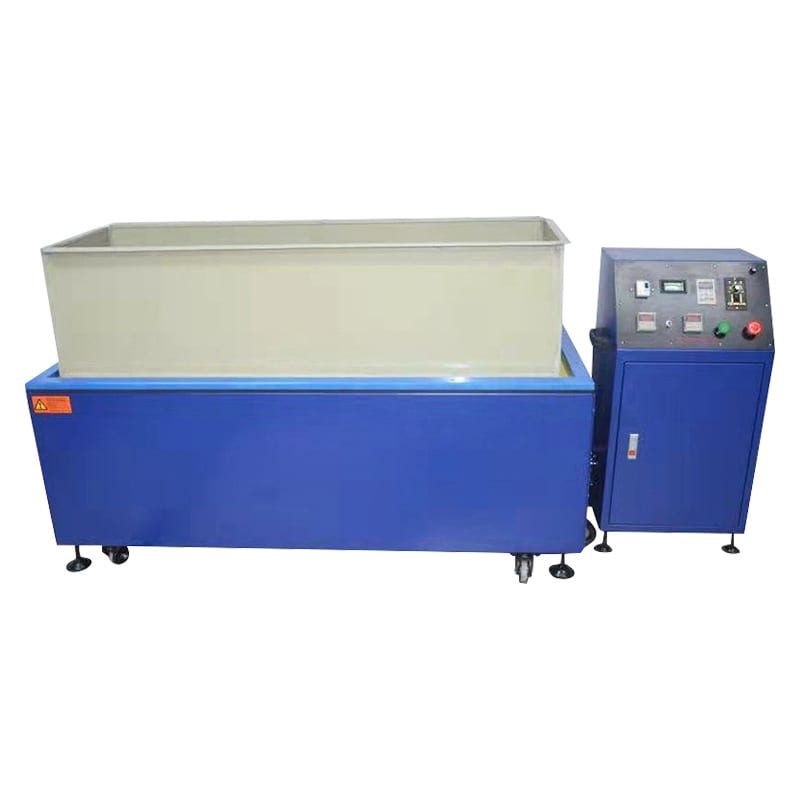
Whenever the hardest burr sits inside a cross-drilled bore, narrow heatsink fin, or deep undercut where ceramic stones cannot fit, a translating OBD magnetic polishing machine sweeps fine 304 stainless steel pins magnetically through internal passages without rounding critical external edges or flattening delicate threads.
4. Wide-Channel Circular Vibratory Bowls for Medium Complex Batches
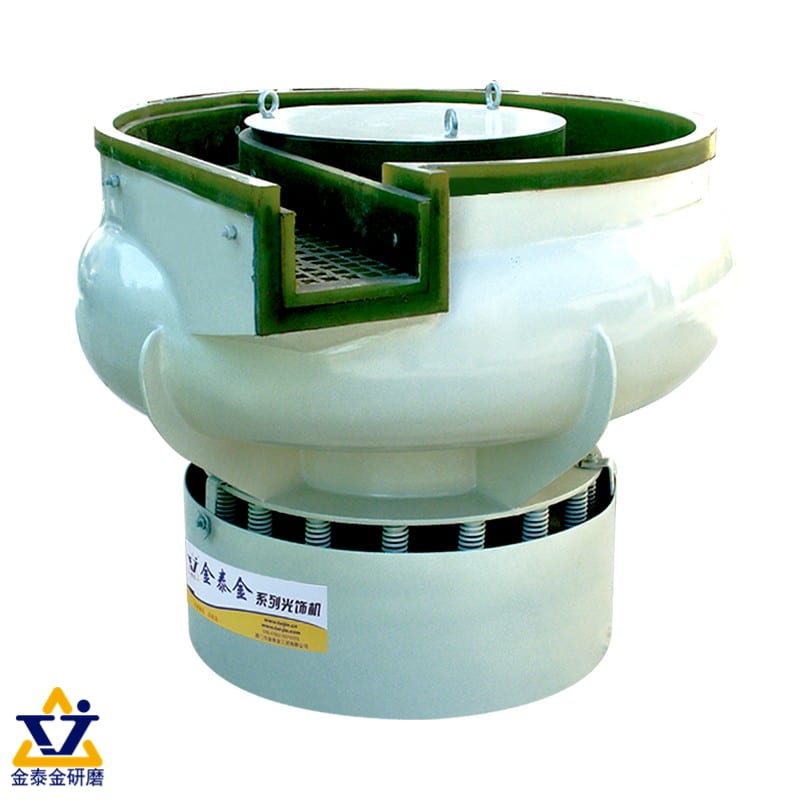
For medium-sized die-cast enclosures, pump covers, and machined brackets that can tolerate cushioned bulk motion at high media-to-part ratios, a polyurethane-lined vibratory grinder with continuous LC10 flow-through and an integrated separation deck delivers reliable, low-labor batching.
5. Centrifugal Disc Finishers for Compact, Rigid Intricate Parts
Small, sturdy intricate components—such as sintered stainless lock bodies, thick CNC sensor housings, and small precision linkages—process dramatically faster in a centrifugal disc finisher. The spinning bottom disc throws media and parts into a tight, high-pressure toroidal vortex, cutting cycle times sharply where parts are rigid enough to withstand vigorous contact.
| Selection Criterion | Divided Vibratory Trough | Fixtured Drag Finisher | OBD Magnetic Tumbler | Centrifugal Disc | Circular Vibratory Bowl |
|---|---|---|---|---|---|
| Max Part Size | Large / Long | Medium (spindle-mounted) | Small-Medium (non-ferrous / 304) |
Compact | Small-Medium |
| Part-on-Part Contact | Zero (1 per bay) | Zero (clamped) | Low-Medium | High energy | Medium (media-cushioned) |
| Internal Cross-Hole Reach | Moderate | Moderate | Highest (magnetic pins) | Moderate | Moderate |
| Edge Radius Control | Very High | Maximum | Delicate (barely touches edges) | Fast aggressive cut | High |
| Best Alloy Fit | All metals | All metals | Non-ferrous & 304 stainless |
Rigid steels / alloys | All metals |
[DESIGN: Selection matrix mapping part envelope, internal bore access, fragility, and alloy type across five machine platforms]
Media Selection for Complex Pockets, Threads, and Narrow Slots
Even the best machine platform fails if media geometry locks inside part features instead of flowing cleanly past them.

Non-Lodging Geometry Rules for Cross-Holes and Slots
Measure the narrowest slot, counterbore, and thread pitch on your part before selecting media. Every ceramic triangle, angle-cut cylinder, or resin-bonded plastic cone must either be strictly larger than the widest vulnerable opening so it bridges harmlessly over the pocket, or substantially smaller so single pieces pass straight through without wedging.
Ceramic vs. Resin Plastic Media on Complex Machined Surfaces
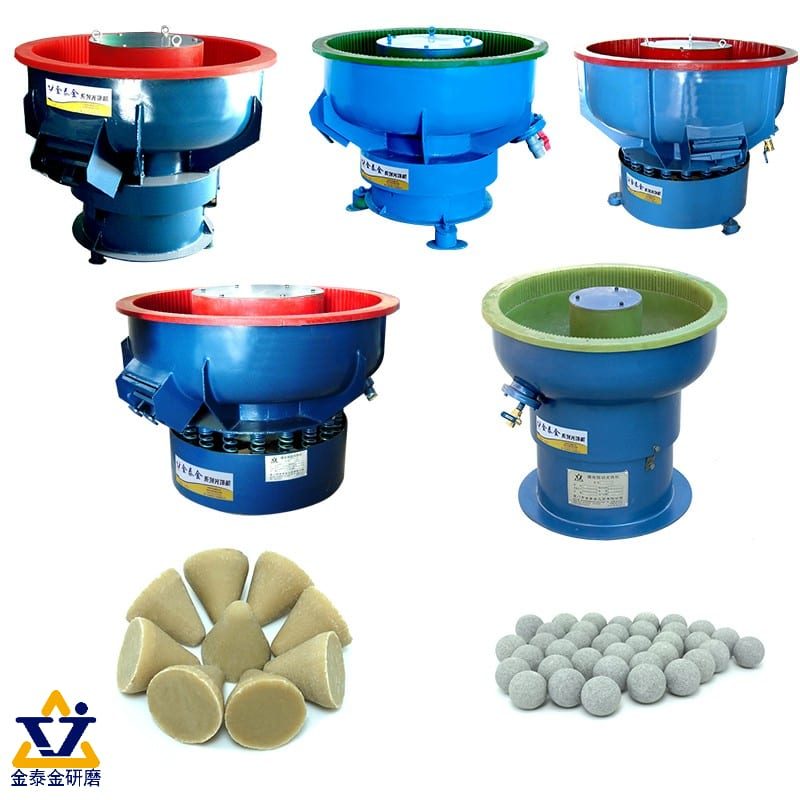
Dense preformed ceramic media shears tough CNC exit burrs on stainless steel, carbon steel, and titanium quickly—but heavy ceramic bruises soft 6061 aluminum or brass threads. Switch to lightweight resin-bonded plastic cones whenever complex parts combine thin aluminum walls with tight flatness or anodize-ready cosmetic requirements.
Combining Magnetic Pin Deburring With Vibratory Smoothing
Some ultra-complex medical or hydraulic blocks require two complementary stages: a brief translating magnetic pin cycle to clear deep internal cross-bore feather burrs, followed by a cushioned plastic-or-porcelain vibratory cycle to refine external cosmetic faces cleanly.
Compound Chemistry and Flow-Through Control for Intricate Parts
Complex pockets trap dirty metallic sludge and cutting oil far more stubbornly than simple flat plates.

Pre-Degreasing Oily CNC Parts Before Loading
Thick CNC coolant and tapping oil cling inside blind tapped holes and narrow grooves. Loading oily parts straight into ceramic or plastic media coats the stones, kills cutting action, and turns compound foam into dark gray paste that packs inside internal pockets. Always pre-wash heavily oiled batches before finishing.
Continuous Flow-Through With LC10, MC8, and Neutral Chemistry
Running a wet vibratory or centrifugal chamber as a closed dirty sump guarantees gritty residue settles inside deep pockets. Steady fresh-water and LC10 (or MC8 for heavy scale) flow-through carries fine metallic debris straight out of the drain screen—while neutral chemistry protects complex aluminum housings from selective alloy etching.
Thorough Flushing and Heated Spin-Drying for Blind Pockets
After finishing, rinse complex housings thoroughly to evacuate trapped soap foam from blind bores, then transfer parts immediately into a heated centrifugal dryer or warm forced-air drying station. For intricate parts with persistent moisture pockets, a heated bowl of dry corncob media pulls remaining droplets cleanly out of narrow recesses.
Alloy-Specific Pitfalls on Complex Geometries
Material chemistry interacts directly with chamber forces and media weight.

Aluminum 6061 / 7075 and Die-Cast A380
Soft aluminum alloys suffer edge bruising under heavy ceramic and rapid dark staining under high-pH soaps. Pair neutral chemistry with low-density plastic cones inside PU-lined divided troughs or drag fixtures, and always separate aluminum media charges from ferrous runs.
Austenitic 304 Stainless Steel vs. Magnetic Carbon Steel
In magnetic pin tumblers, 304 stainless steel and non-ferrous alloys (brass, copper, aluminum) let magnetic fields pass cleanly through the part so stainless pins scrub internal bores vigorously—whereas strongly ferromagnetic carbon steel distorts magnetic flux and pins clamp directly onto the part wall instead of circulating. For complex carbon steel parts, rely on divided troughs, centrifugal disc finishers, or rotary barrels with LC10 + rust-inhibited rinsing.
Titanium and Nickel Superalloys
Complex aerospace titanium and superalloy manifolds work-harden rapidly and tolerate zero free iron contamination. Run dedicated alloy-segregated high-alumina ceramic or plastic media charges inside thick cast polyurethane chambers.
Common Failure Modes When Finishing Complex Metal Parts
Catching these four setup mistakes early saves entire machining batches from scrap.
Media Tip Wedging After Partial Stone Wear
A brand-new ceramic triangle may clear a cooling slot safely on day one, then wear down just enough after several shifts to wedge tightly inside the exact same slot. Screen media regularly to purge undersized worn chips before they reach critical slot dimensions.
Expecting Bulk Tumbling to Reach Deep Dead-End Blind Bores
No tumbling stone or plastic cone can circulate vigorously inside a deep, narrow dead-end blind hole with zero flow exit. Recognize upfront when internal bores require fine magnetic pins or dedicated mechanical cross-hole brushing upstream.
Over-Rounding Precision Sealing Lands While Chasing One Stubborn Burr
If one heavy CNC exit burr takes far longer to remove than the rest of the part, leaving the whole batch tumbling until that single burr disappears will over-radius critical O-ring grooves and chamfered sealing faces. Tune upstream CNC cutting toolpaths or knock down massive primary burrs lightly first so mass finishing works uniformly across mild, predictable burrs.
Mixing Heavy Parts and Delicate Parts in One Bowl
Running thick cast brackets alongside thin sheet-metal covers in the same bowl turns the heavy brackets into hammers. Always segregate batches by part mass and stiffness.
Running Undersized Media Ratios to Force Higher Throughput
Cramming extra machined blocks into a vibratory bowl to boost parts per cycle starves the protective media cushion between parts. Instead of finishing faster, colliding metal edges dent critical machined flanges and extend the total time required to blend out fresh impact marks. Keeping a generous media-to-part volume ratio ensures every complex face stays surrounded by rolling stones or plastic cones throughout the entire cycle.
[DESIGN: Media-to-part volume ratio diagram showing cushioned complex housings vs colliding overcrowded parts]
Honest Boundaries: What We Do and Do Not Supply
At Xiamen Jin Tai Jin Grinding Technology Co.,Ltd. (brand: Jings Polish), our workshop roots date back to 1996 and our company was formally established in 2009, delivering over 200,000+ sets of grinding and polishing solutions worldwide. Across our catalogue, we manufacture 21 machine platforms backed by 24 granted Chinese IP rights (1 invention patent, 15 utility model patents, and 8 design patents), under ISO 9001 certification 00726Q01571R001 (valid 2026-06-03 to 2029-06-02) and CE certifications M.2023.206.C88121 (Vertical, 8 models) and M.2023.206.C88120 (Horizontal, 13 models), valid until 2028-07-24.
[DESIGN: Jings Polish workshop floor displaying 21 machine platforms including divided troughs, drag finishers, and magnetic tumblers]
Equipment, Media, and Compounds—Not Contract Part Finishing
We design and manufacture industrial mass finishing equipment (vibratory bowls, divided rectangular troughs, drag finishers, centrifugal disc finishers, translating magnetic tumblers, rotary barrels, heated dryers), media, and compounds for your own production floor. We do not provide contract job-shop finishing services. Standard machines ship in 25–35 days, while custom divided troughs and drag-finishing fixtures require 45–60 days.
No CNC Machining, Abrasive Blasting, Electroplating, or Hand Tools
We do not supply CNC milling/turning centers, abrasive sandblasting cabinets, anodizing or electroplating tanks, acid passivation lines, or hand-held angle grinders. For metal edge finishing and superfinishing workflows, mass finishing complements precision machining cleanly rather than replacing upstream cutting or downstream plating.
Engineering Assessment Before Recommending a Machine
Because pocket widths, thread tolerances, and alloy hardness dictate whether you need a divided trough, drag fixture, or OBD magnetic tumbler, we do not promise free mail-in sample trials or guarantee cycle times before inspecting your workpiece—send clear photos showing critical pockets, threads, and overall dimensions via our custom polishing solution page for an engineering assessment.
Buyer Checklist & FAQ for Complex Metal Parts
Use this practical checklist before requesting equipment recommendations.
What is the single best machine for complex metal parts with fragile external threads?
Either a fixtured drag finisher (clamping each part individually) or a divided rectangular vibratory trough (isolating one part per polyurethane compartment) paired with non-lodging plastic or fine ceramic media—both eliminate part-on-part thread denting completely.
Can a magnetic tumbler replace a vibratory bowl on complex stainless steel blocks?
A wide-table OBD magnetic tumbler excels at internal cross-holes, tight fins, and bright cosmetic finishing on 304 stainless, brass, and aluminum—but it does not remove heavy external machining ridges or round thick structural edges the way ceramic media in a vibratory bowl or centrifugal disc finisher does. Many complex shops pair both platforms.
How do I keep media from getting stuck in blind tapped holes?
Either plug critical threaded bores before tumbling, choose media shapes larger than the tap drill diameter, or switch to fine magnetic stainless pins (for non-ferrous and 304 parts) that flush out effortlessly.
Should I buy one giant circular vibratory bowl for varied complex parts?
Avoid oversized single bowls if your parts include long rails, heavy blocks, or fragile ribs that collide or bridge the channel. A divided rectangular trough with removable dividers adapts far more safely across complex geometries.
Why do my complex aluminum housings turn dark gray after vibratory deburring?
Either the compound pH was too alkaline, dirty compound water recirculated metallic fines back onto the parts, or steel-contaminated media touched the aluminum. Switch to dedicated resin plastic cones with neutral LC10 or JTS5 flow-through.
When should a shop split complex part finishing across two different machine types?
Many medical, hydraulic, and aerospace plants handle ultra-complex manifolds by pairing two specialized chambers instead of forcing one machine to compromise. For example, a brief cycle in a wide-table OBD magnetic tumbler drives fine 304 stainless pins into deep internal cross-bores to strip feather burrs, followed by a cushioned cycle in a divided rectangular vibratory trough with resin plastic cones to smooth external machined faces and round outer edges cleanly without thread bruising.
How do I verify whether a long CNC-milled bracket will bridge inside a circular vibratory bowl?
Compare the longest diagonal corner-to-corner dimension of your bracket against the clear processing channel width of the bowl, not its overall outer diameter. Whenever the part diagonal approaches or exceeds the channel width, parts wedge across the radial flow, stall the media roll, and suffer severe impact marks—meaning you should move directly to a divided rectangular trough or fixtured drag finisher.
What role does automated screening play when finishing complex parts with multiple hole sizes?
Even a carefully chosen non-lodging ceramic triangle will eventually wear down enough to jam inside a cooling slot or tapped bore. Automated vibrating separation screens purge undersized broken chips during unload, while periodic batch re-screening keeps the working media charge within safe dimensional limits so operators do not waste shifts picking stuck stones out of finished housings.
How does cast polyurethane chamber lining protect complex thin-walled parts?
Thick poured-cast polyurethane absorbs the sharp impact energy of heavy parts striking chamber walls, dramatically lowering edge denting on thin ribs while preventing bare-steel rust or iron contamination on aluminum, brass, and stainless assemblies. It also reduces shop floor noise significantly compared to unlined rotary drums.
Can additive-manufactured or 3D-printed metal parts be finished in the same equipment?
Yes, provided you respect part density and internal powder-bed channels. Laser-sintered stainless and titanium brackets carry rough stepped layer lines and partially sintered powder skins that cut down smoothly with sharp ceramic triangles in a vibratory bowl or centrifugal disc finisher—just remember that deep internal lattice cores cannot be smoothed uniformly by external tumbling media.
How do I prevent nested stamped brackets from sticking together in wet vibratory bowls?
Flat or cupped stamped parts trap compound water between mating faces and ride through the bowl as doubled-up stacks, leaving inner surfaces completely unfinished. Solve this by raising the media-to-part volume ratio, keeping water flow controlled rather than flooded, and feeding parts evenly across the vibrating media bed instead of dumping stacked piles all at once.
When is a centrifugal barrel or drag finisher worth the higher initial investment over a standard bowl?
When your complex parts are high-value CNC components—such as aerospace impellers, medical bone plates, or precision hydraulic blocks—where even one part-on-part nick scraps the entire workpiece, or when high-volume production demands rapid cycle times in minimal floor space. In both scenarios, eliminating manual hand-deburring labor and collision scrap recovers the capital difference quickly.
What information should I send to get an accurate equipment recommendation for complex parts?
Share clear photos from multiple angles showing burrs, threads, and internal pockets, along with alloy grade, part envelope dimensions and weight, narrowest slot or hole size, and hourly batch target. Also mention any critical sealing faces, thin cantilevered ribs, or press-fit bores that require zero edge rounding or compartment isolation. Our engineers can match the exact machine platform—whether divided rectangular trough, fixtured drag finisher, OBD magnetic tumbler, or centrifugal disc—and non-lodging media to your geometry.
[DESIGN: Final summary card linking geometric risk assessment to divided troughs, drag finishers, centrifugal discs, and magnetic tumblers]
 +86-592-2381506


 IPv6 network supported
