
Gear Polishing and Powertrain Mass Finishing: Crankshaft, Connecting Rod, and Valve Workflows
Powertrain and fluid-control components—gears, crankshafts, connecting rods, and engine or hydraulic valves—fail when directional machining ridges break oil films, sharp edge burrs crack under cyclic load, or stray debris scores bearing journals. Yet searching for a crankshaft polishing tool or gear polishing equipment turns up everything from handheld belt straps to multi-spindle automated drag tubs.
This guide separates what belongs on a single-journal belt fixture from what belongs inside automated batch chambers—covering gear polishing, connecting rod polishing, and polishing valves using high-speed drag finishers, vibratory troughs, and magnetic precision units. For broader machine naming, see finishing machine names and vibratory finishing.
Why Powertrain Parts Fail Without Controlled Edge & Surface Finishing
Every rotating or reciprocating alloy component carries specific stress risers left by hobbing, broaching, forging, or cylindrical grinding. Polishing blindly without targeting those risers wastes cycle time and risks dimensional tolerances.

Directional grinding ridges on gear teeth and bearing journals
Gear hobbing, grinding, and lathe turning cut along a single tool axis, leaving microscopic parallel ridges along flanks and journals. Under high contact load, those ridges pierce lubricant films, raising friction heat and causing premature micro-pitting. Non-directional mass finishing knocks down sharp peaks evenly without altering tooth profile or journal diameter.
Sharp broaching and forging burrs on connecting rods
Forged and machined connecting rods carry parting-line flash, sharp bolt-hole exit burrs, and rough machined edges around the big-end and small-end bores. Under high-RPM tensile and compressive cycling, any sharp notch acts as a fatigue crack starter. Uniform edge radiusing across connecting rod beams and bolt bosses reduces stress concentration cleanly.
Internal port and stem burrs when polishing valves
Engine valves and hydraulic valve sleeves suffer from two distinct finishing challenges: smooth, low-friction stems or heads on the outside, and crisp, burr-free cross-ports or threads on the inside. Loose tumbling chips easily bridge across small cross-holes while leaving internal burrs untouched. Matching chamber motion to external versus internal valve features prevents costly hand deburring.
Why handheld crankshaft straps cannot fix batch bottlenecks
A manual crankshaft polishing tool—such as a handheld abrasive belt strap or pedestal cloth buffer—works for one-off engine rebuilds in a repair bay. However, on a production line running dozens of shafts, gears, or rods per shift, manual straps vary wildly with operator pressure and never touch recessed fillets or gear roots. We do not build handheld belt straps, angle grinders, or cloth buffing wheels—we build automated chamber-based finishing systems.
Matching Mass-Finishing Chambers to Powertrain Geometries
Across our machines portfolio, four distinct chamber architectures handle gear polishing, connecting rod polishing, polishing valves, and shaft smoothing without manual hand-work.
| Component Type | Recommended Chamber | Why This Architecture Fits | Collision Protection |
|---|---|---|---|
| Hardened Gears & Pinions | High-speed drag finisher | Clamped spindles polish tooth flanks symmetrically with zero contact | Zero — parts never touch each other |
| Connecting Rods & Long Shafts | Long rectangular trough (L1300, L1500, L1800) or drag unit |
Fits elongated beams; dividers isolate heavy rods | High — removable bays stop beam-to-beam dings |
| Engine & Hydraulic Valves (External) | Vibratory bowl (ZL) or centrifugal disc (LLF) |
Fast, uniform smoothing on stems, heads, and collars | Moderate-high with generous media cushion |
| Stainless / Brass Valve Sleeves (Internal) | Magnetic precision polisher (OBD / HBPG) |
Fine stainless pins enter cross-bores and threads cleanly | High on non-magnetic alloys |
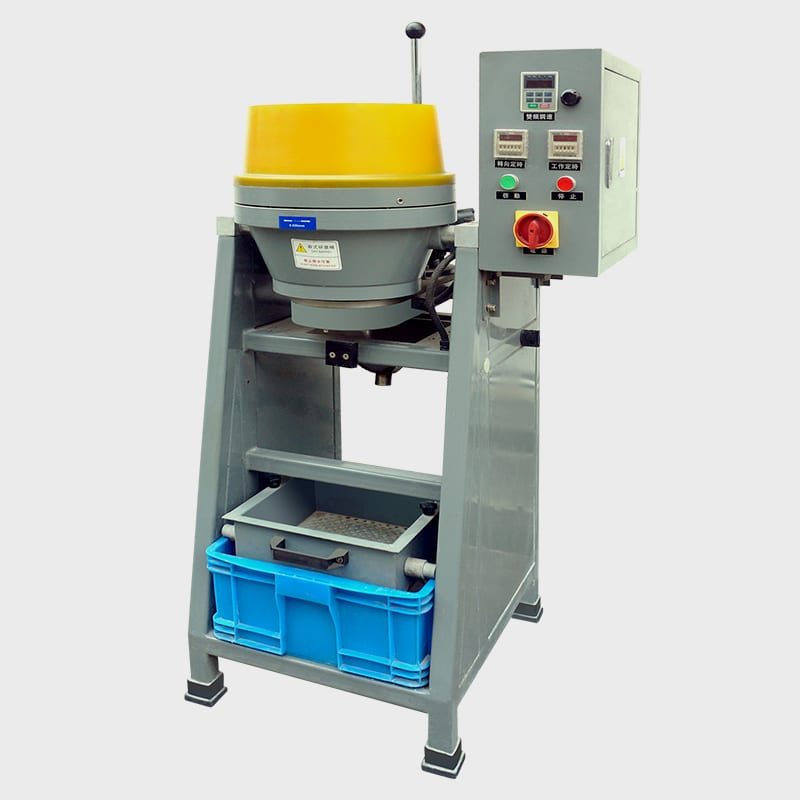
High-speed drag finishers for collision-free gear polishing
Hardened transmission gears, spline shafts, and precision pinions cannot afford a single tooth-tip ding against a neighbour. A high-speed drag finishing machine clamps each gear on an individual rotating spindle and drags it through a stationary tub of high-density media. Because every spindle rotates on its own axis while orbiting the tub, media flows evenly across tooth roots and tips alike. Bi-directional spindle rotation ensures both leading and trailing tooth flanks finish symmetrically with zero part-to-part contact.
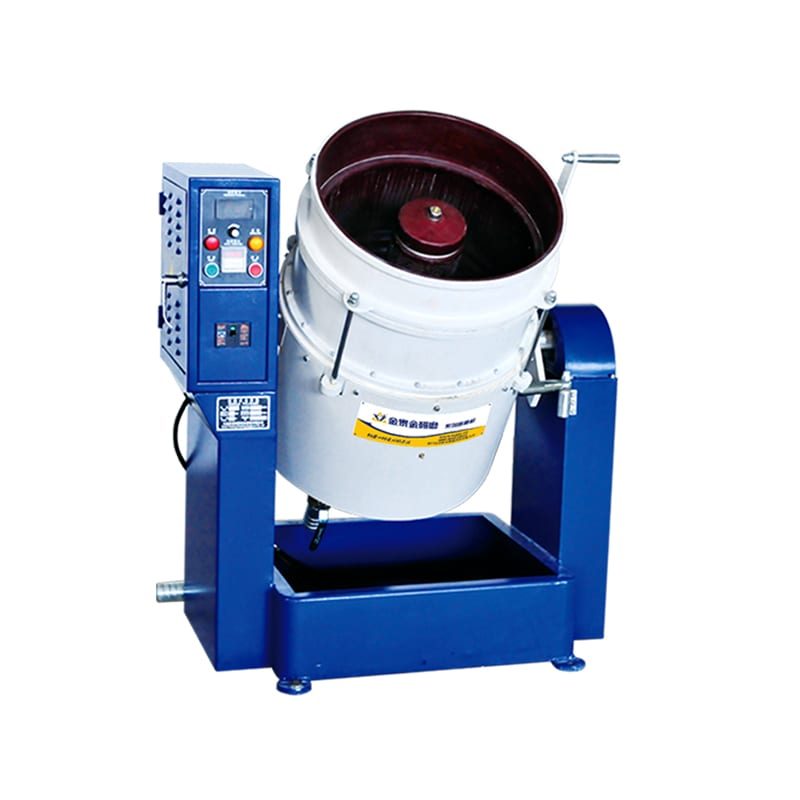
Rectangular vibratory troughs for connecting rod polishing
Long forged connecting rods, camshafts, and balance shafts cannot turn around the centre dome of a circular bowl without jamming or banging end-to-end. Long rectangular troughs—such as our L1300, L1500, and L1800 models—give elongated beams plenty of channel length, and removable polyurethane-lined dividers keep heavy rods isolated in individual bays throughout the entire cycle. Divided troughs deliver uniform connecting rod polishing without manual fixturing or part-on-part collision marks.
Circular vibratory bowls and centrifugal discs for valve batches
Smaller valve heads, collars, and stamped retainers run efficiently inside a vibratory finishing machine (ZL series) with an integrated separation deck, or inside a centrifugal disc unit (LLF120) for compact batches. Gentle spiral flow smooths stem transitions and rounds sharp seat edges evenly without altering valve stem straightness. See our vibratory finishing guide for how open-bowl media flow protects concentricity.
Magnetic polishers for non-magnetic valve ports and threads
When polishing valves made from non-magnetic 304/316 stainless steel, brass, or bronze, internal cross-ports and fine threads trap burrs where ceramic chips cannot enter. A magnetic precision polisher (OBD-30 through OBD-100 or OBD-HBPG / HBPG-01 / HBPG-02) spins fine stainless pins inside blind bores and internal grooves without rounding outer sealing lands. Never load carbon steel or magnetic 400-series valves into a magnetic bowl—they clamp straight to the magnet plate.
Crankshaft Polishing Tool vs Batch Mass Finishing: Honest Boundaries
Buyers searching crankshaft polishing tool often ask whether a vibratory trough or drag finisher replaces a dedicated crankshaft micro-finishing lathe. Being honest about the boundary saves wasted capital.
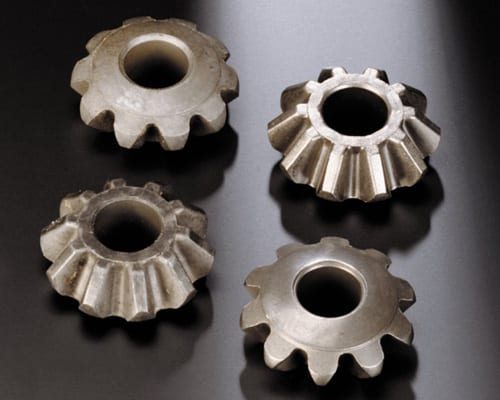
Where dedicated crankshaft journal polishers remain essential
Large multi-throw automotive crankshafts require strict cylindrical roundness and bearing-journal concentricity across main and rod journals. Dedicated crankshaft micro-finishing lathes and abrasive-film shoe machines polish those specific journals in-situ while holding concentricity. We do not build dedicated crankshaft micro-finishing lathes, handheld belt straps, or cloth buffing wheels.
Where mass finishing helps shafts, cam lobes, and counterweights
For compact single-throw crankshafts, forged cam lobes, balance shafts, and gear-driven stub shafts, high-speed drag finishers and divided rectangular vibratory troughs (L1300, L1500, L1800) deburr oil-hole intersections, round counterweight edges, and refine bearing-surface plateaus uniformly. Mass finishing excels at complex 3D fillets, oil-hole edges, and non-directional surface smoothing.
Deburring cross-drilled oil holes safely
Cross-drilled oil passages on crankshafts and connecting rods leave razor-sharp internal burrs at the journal breakthrough. While exterior media smooths the chamfer entrance cleanly, always verify that media size cannot wedge inside the oil gallery—using worn-media dimensions rather than brand-new chip sizes. Never let broken ceramic chips lodge inside an engine oil passage.
[DESIGN: Gauge check comparing worn ceramic triangle media against a cross-drilled connecting rod oil passage]
Honest scope: no contract job shop, plating, or heat treatment
Our equipment prepares bare, uniform mechanical metal surfaces for assembly or downstream specialist processing. We do not operate a contract job shop, and we do not offer nitriding, induction heat treatment, hard chrome plating, PVD coating, or passivation services.
Media and Compounds for Gears, Rods, and Valves
Choosing the right media from our grinding media range and verified liquid compounds prevents soft-metal bruising and steel flash rust.

MC8, LC10, and JTJ50 drumsCeramic cutting media for forged flash and hobbing burrs
Heavy forging flash on connecting rod polishing runs and tough hobbing burrs on steel gears require dense ceramic triangles or angle-cut cylinders to shear away sharp edges reliably. Choose chip geometry small enough to reach tooth roots and bolt-hole chamfers while staying safely larger than oil holes, and screen out undersized fragments on schedule. Never use soft plastic media to strip heavy steel forging burrs.

High-alumina ceramic media for super-finished gear flanks
Once burrs and heavy tool steps are gone, switch to smooth, non-abrasive high-alumina ceramic balls or cylinders. High-alumina media rubs microscopic grinding peaks flat without cutting into gear tooth geometry, delivering a smooth, oil-retaining bearing plateau. Check our isotropic finishing guide for how non-directional peak-levelling extends gear life.
Resin-bonded plastic media for aluminium and bronze valve bodies
Aluminium valve blocks, bronze pump impellers, and brass fittings dent easily under heavy steel or high-alumina media. Resin-bonded plastic cones cushion soft non-ferrous components while smoothing CNC step marks cleanly. Review aluminum finishes and copper alloy finishing for keeping non-ferrous alloys bright and bruise-free.
Verified Jings Polish compounds for steel and stainless parts
Running wet powertrain cycles in plain tap water invites immediate flash rust and dirty oxide staining. Match our verified liquid compounds directly to each stage:
compound-MC8: Strips heat-treat scale, oxide film, and surface rust on forged steel parts.compound-LC10: Accelerates deburring and edge radiusing on tough steel gears and rods.compound-JTJ20&compound-JTJ25: Coarse cutting support for stainless valve hardware and general metal prep.compound-JTJ50&compound-JTJ60: Stainless brightening and fine metal polishing during finish passes.compound-JTS5&compound-HM3: Thin-section precision finishing and final brightening support.
We supply liquid compounds for wet media systems and select pastes for dry tumbling, while never designing custom chemical cleaning formulas.
Step-by-Step Workflow for Powertrain Mass Finishing
Follow this four-stage workflow to keep gear polishing, connecting rod polishing, and polishing valves repeatable across every shift.
| Workflow Stage | Shop-Floor Action | Equipment & Media | Quality Gate Before Next Step |
|---|---|---|---|
| 1. Pre-Wash & Scale Strip | Degrease oil; strip heat-treat scale if present | Wash + ceramic media + compound-MC8 |
Zero cutting oil or dark heat-treat scale remaining |
| 2. Deburr & Edge Radius | Knock down hobbing/forging burrs uniformly | Ceramic (steel) or plastic (Al) + LC10 / JTJ20 |
Smooth burr-free edges; zero wedged media in oil holes |
| 3. Non-Directional Polish | Refine tooth flanks, stems, and bearing surfaces | High-alumina media (JTJ50/JTJ60) or drag tub |
Even plateau finish without directional grinding grooves |
| 4. Rinse & Spin Dry | Neutralize chemistry and stop flash rust fast | Clean rinse + heat centrifugal spin dryer (35/70) |
Bone-dry, rust-free parts ready for assembly or coating |
[DESIGN: Four-stage powertrain finishing board showing a hobbed steel gear moving from raw scaled state through ceramic deburring, high-alumina smoothing, and spin-dried finish]
Degreasing machining oil and stripping heat-treat scale first
Gear-cutting oil and forging scale ruin polishing media within minutes—oil glazes abrasive pores while hard scale resists fine burnishing. Degrease oily parts thoroughly and run compound-MC8 with ceramic media whenever heat-treatment scale is present. Clean, scale-free metal cuts and brightens dramatically faster.
Separating cut-down deburring from bright burnishing
Never ask one coarse ceramic charge to both break heavy forging burrs and deliver a smooth bearing plateau. Run rough deburring in a dedicated ceramic stage, rinse parts clean, and move to smooth high-alumina media or dry walnut/corn cob from our dry finishing media line for final lustre. Stage separation prevents coarse grit from scratching finished flanks.
Checking oil holes, threads, and bores before drying
Before transferring finished gears, rods, or valves out of the finishing cell, inspect all oil passages, bolt holes, and cross-ports to confirm zero broken media fragments or magnetic pins remain trapped. Build a quick illuminated visual check into the rinse station. One stray chip inside an engine oil gallery can seize a bearing downstream.
Rapid centrifugal spin drying to prevent flash rust
Carbon steel gears and forged connecting rods flash-rust rapidly if left wet in open shop baskets. Rinse finished loads cleanly and dry them immediately inside a heat centrifugal spin dryer (35, 35A, 70, or 70A models) so warm airflow clears moisture out of bolt holes and splines before assembly or rust-preventive oiling. See our post-finishing separate wash and dry guide for clean cell layout.

Common Mistakes in Gear, Connecting Rod, and Valve Polishing
Avoid these four shop-floor traps when automating powertrain finishing.
[DESIGN: Troubleshooting matrix showing four powertrain finishing errors: chipped gear teeth from loose tumbling, wedged ceramic chips in an oil hole, rusted carbon steel gear flanks, and magnetic carbon steel clamped to a bowl floor]
Tumbling heavy hardened gears loose without dividers
Dropping heavy carburized gears loose into an undivided vibratory bowl lets sharp tooth tips slam together, leaving tiny crescent nicks along pitch lines and ruining gearbox acoustic targets. Use a high-speed drag finisher with individual spindles—or divided rectangular troughs for large shafts—whenever part weight threatens tooth edges. Protecting pitch-line accuracy during finishing saves costly downstream gear rework.
Loading ferromagnetic steel valves into magnetic bowls
Because magnetic precision polishers (OBD and HBPG series) look compact and clean, operators occasionally drop carbon steel or 400-series martensitic stainless valves into them. Ferromagnetic steel snaps straight to the magnet plate, scratching the thin non-magnetic bowl floor and halting pin flow immediately. Keep magnetic bowls strictly for non-magnetic 304/316 stainless, brass, bronze, aluminium, and precious metals.
Over-rounding precision valve lands and gear tips
Running aggressive cutting ceramic too long rounds sharp hydraulic valve metering lands and shrinks gear tooth tips out of print tolerance. Establish fixed cycle timers during initial validation and switch to gentle non-abrasive high-alumina media as soon as burrs clear, keeping dimensional profiles crisp while smoothing flanks. Protect critical dimensional tolerances first, then refine surface finish.
Skipping dedicated alloy separation in job shops
Running cast iron or carbon steel connecting rods in the same ceramic charge used for 304 stainless steel valves embeds free iron into the stainless surface, causing orange rust blooms later on finished hardware. Keep ferrous and stainless media bins strictly separated—a core rule in job shop finishing and stainless steel finishes. Dedicated media bins prevent costly cross-contamination across mixed-metal shifts.
How Xiamen Jin Tai Jin Builds Powertrain Finishing Systems
At Xiamen Jin Tai Jin Grinding Technology Co.,Ltd. (brand: Jings Polish), our workshop started in 1992 and our company was formally established in 2002, delivering over 200,000+ sets of grinding and polishing solutions to customers worldwide. Across our catalogue, we manufacture 21 machine platforms backed by 24 granted Chinese IP rights—including 1 invention patent, 17 utility model patents, and 6 design patents—under ISO 9001 certification 00726Q01571R001 (valid 2026-06-03 to 2029-06-02) and CE certifications M.2023.206.C88121 (Vertical, 8 models) and M.2023.206.C88120 (Horizontal, 13 models), valid until 2028-07-24.
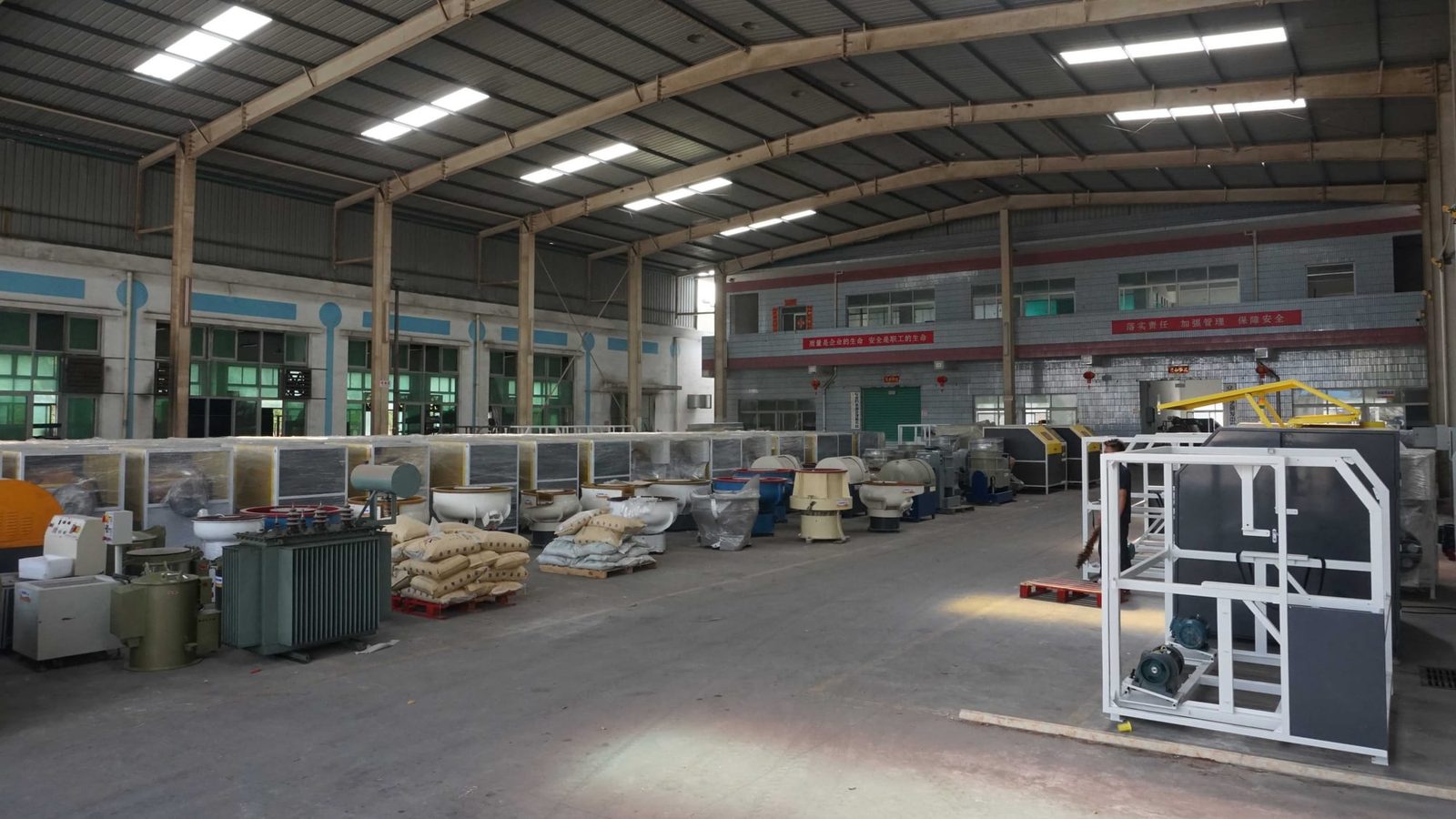
Equipment, media, and compounds we supply
We build high-speed drag finishing machines, long rectangular vibratory troughs (L1300, L1500, L1800), circular vibratory bowls (ZL series), barrel finishing machines, centrifugal disc and barrel units (LLF120, LX series), magnetic precision polishers (OBD and HBPG series), heat centrifugal spin dryers (35, 35A, 70, 70A), and media cleaners for automated shop cells. We also manufacture ceramic, plastic, high-alumina, steel, walnut shell, and corn cob media alongside our verified HM3, JTJ20, JTJ25, JTJ50, JTJ60, JTS5, LC10, and MC8 compounds for wet and dry finishing.
Honest boundaries on what we do not offer
In accordance with our choosing a mass finishing supplier checklist, we state our scope plainly. We do not build dedicated crankshaft micro-finishing lathes, handheld belt straps, angle grinders, or cloth buffing wheels; we do not supply sandblasting abrasives, hard chrome plating, PVD coating, passivation, or heat treatment; we do not design custom chemical cleaning formulas; and we do not operate a contract job shop or accept parts for paid polishing.
Standard and custom build lead times
Standard vibratory, barrel, centrifugal, and spin-drying equipment ships within a 25 to 35 day production lead time once specifications are confirmed. Custom-engineered drag-finishing fixtures, divided rectangular troughs, and integrated multi-stage powertrain finishing lines require 45 to 60 days to build and test.
Requesting an initial assessment from part photos
We do not promise free mail-in sample trials or guarantee surface roughness values before reviewing your workpiece. Send clear close-up photos of your gears, connecting rods, valves, or shafts showing burrs, oil-hole sizes, alloy grade, target finish, and daily batch target via our custom polishing solution page—our engineers can evaluate your photos and drawings to recommend the right chamber architecture and media charge.
Frequently Asked Questions
What is the safest machine for gear polishing without tooth-tip nicks?
A high-speed drag finishing machine is the safest choice for heavy or high-value gear polishing, because each gear clamps onto an individual rotating spindle and travels through stationary high-alumina or ceramic media with zero part-to-part collision and symmetric flank contact.
Can mass finishing replace a dedicated crankshaft polishing tool?
For oversized multi-throw engine crankshafts requiring tight journal concentricity, dedicated crankshaft micro-finishing lathes remain necessary. For compact single-throw shafts, cam lobes, and counterweights, divided rectangular vibratory troughs (L series) and drag finishers handle edge deburring, oil-hole rounding, and non-directional smoothing cleanly.
How do shops automate connecting rod polishing without bending or denting beams?
Use a long rectangular vibratory trough (L1300, L1500, or L1800) fitted with removable compartment dividers so heavy forged rods stay isolated in individual bays while ceramic media rounds parting lines and bolt-hole burrs evenly without beam collision.
Which machine works best for polishing valves with internal cross-ports?
For non-magnetic stainless steel or brass valves with internal threads and cross-ports, pair external vibratory smoothing with a magnetic precision polisher (OBD or HBPG series) so fine stainless pins clean internal passages without rounding outer sealing lands or damaging thread crests.
How do I keep carbon steel gears from rusting after wet mass finishing?
Run wet cycles with rust-inhibiting compound (MC8, LC10, or JTJ25), rinse cleanly to flush oxide silt, and dry parts immediately inside a heat centrifugal spin dryer (35 or 70 series) before storage, oiling, or downstream assembly.
What details should I send before ordering powertrain finishing equipment?
Send clear close-up photos of your gear, connecting rod, or valve showing burrs, surface condition, and oil holes, along with overall dimensions, part weight, alloy grade, target finish, and daily batch volume. Our engineers can recommend the right machine architecture, media grade, and compound setup from photos and drawings before quoting.
[DESIGN: Annotated buyer enquiry checklist showing gear tooth close-ups, connecting rod oil-hole measurements, and batch target notes]
 +86-592-2381506


 IPv6 network supported
