
Polishing Pistons, Piston Tops, and Manifolds: Protecting Ring Lands While Smoothing Flow Paths
Motorsport engine builders, remanufacturers, and performance parts makers searching for polishing pistons, polishing piston tops, or manifolds polishing face a strict geometric reality: a forged aluminum piston or cast intake/exhaust manifold cannot simply be tossed loose into a vibrating tub of rocks. Ring grooves, piston skirts, wrist-pin bores, and manifold mounting flanges hold tight dimensional and flatness tolerances that loose part-on-part tumbling destroys in minutes.
The core thesis of this guide is direct: precision piston and manifold mass finishing relies on zero-collision workholding—using fixtured drag finishing or divided vibratory troughs with low-density plastic and porcelain media for external smoothing, while reserving wide-table OBD magnetic tumblers for internal manifold runners. Understanding that boundary lets shops achieve consistent thermal-barrier prep and clean flow-path smoothing without scrapping expensive castings. For related powertrain workflows, see our gear and crankshaft polishing guide and polishing carburetor and intake guide.
Why Pistons and Manifolds Fail in Open Free-Tumbling Bowls
High-performance engine components carry fragile, precision-machined features right next to rough-cast or CNC-scalloped surfaces.
Piston Ring Lands and Skirts Cannot Tolerate Edge Impact
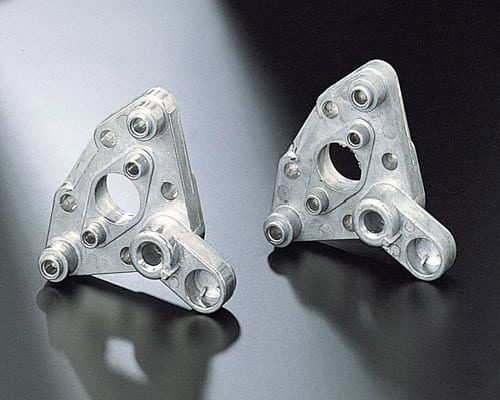
Piston compression-ring grooves require razor-crisp, flat lands and tight axial clearance. Loose tumbling against heavy ceramic triangles—or worse, colliding against adjacent pistons—peens ring-land edges shut, scratches delicate skirt cam profiles, and ruins oil-control geometry. Protecting those precision zones with fitted masking collars and zero-collision drag spindles preserves full dimensional accuracy.
Cast Manifolds Bruise Mounting Flanges When Colliding
Cast aluminum intake manifolds and welded stainless exhaust manifolds are heavy, asymmetric components. Loaded loose into an open circular vibratory bowl, heavy manifold flanges slam into neighboring runners, denting gasket faces and bending thin mounting tabs. Isolating each casting inside a divided rectangular vibratory trough eliminates part-on-part collision completely.
Internal Manifold Runners Are Unreachable by Loose Stones
Even small ceramic cones bridge at manifold plenum turns or lodge inside narrow runner bends, failing to smooth deep internal walls while risking broken stone entrapment inside an engine's intake path. Using wide-table OBD magnetic tumblers for port entrances and keeping loose stones safely sized keeps runners completely clear.
| Engine Component | Critical Tolerance to Protect | Failure in Open Free Tumbling | Controlled Mass-Finishing Solution |
|---|---|---|---|
| Forged / cast aluminum piston | Ring-land sharpness, skirt profile, pin bore | Peened ring grooves & scratched skirts | Fixtured drag finishing (or masked/divided cell) + plastic/porcelain |
Piston dome / crown (polishing piston tops) |
Valve-relief edges & dome thickness | Uneven hand-buffing waves | Staged plastic cut → porcelain burnish with skirt/ring masking |
| Cast aluminum intake manifold | Port-match flanges & plenum sealing | Dented gasket lands & lodged stones | Divided vibratory trough (exterior) + OBD magnetic pins (bores) |
| Welded stainless exhaust manifold | Flange flatness & weld-root cleanliness | Heavy collision nicks & uncleaned fillets | Divided trough + ceramic + MC8 / JTJ50 |
[DESIGN: Four-panel comparison showing peened piston ring grooves, bruised manifold flanges, lodged stones, and fixtured zero-collision finishing]
Fixtured Drag Finishing for Pistons and High-Value Engine Parts
When zero part-on-part contact is mandatory, drag finishing replaces free-floating batch tumbling with rigid spindle fixturing.
How Planetary Drag Spindles Eliminate Part-on-Part Collision
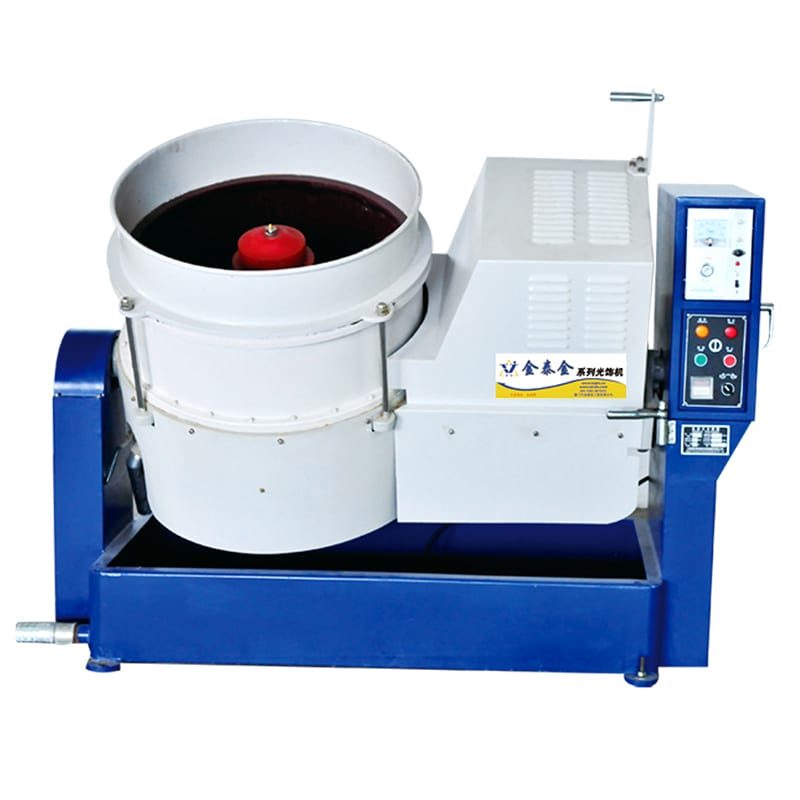
Inside a drag finishing machine, each piston or engine component mounts securely onto an individual rotating spindle on a planetary carousel. As the carousel sweeps spindles through a stationary drum of fine media, every workpiece sees uniform fluid-like media flow without ever touching another part.
Masking Skirts and Ring Grooves When Polishing Piston Tops
When the goal is strictly polishing piston tops (smoothing CNC dome ridges or prepping crowns before thermal-barrier ceramic coating), fitted urethane sleeves or protective collars mask the ring-land pack and piston skirt while leaving only the crown dome exposed to fine resin-bonded plastic cones and porcelain burnishing spheres.
Achieving Uniform Dome Smoothness Without Hand-Buffing Waves
Manual rotary-wheel buffing on piston domes removes uneven metal around valve reliefs and leaves wavy thermal-stress spots. Controlled fixtured mass finishing smooths dome surfaces evenly across every valve pocket with repeatable cycle timing.
Inspecting Wrist-Pin Bores and Oil Return Holes After Unloading
Even with protective fixturing, inspect wrist-pin bores and oil-drain holes beneath the oil-control ring groove after rinsing so zero stray media fines remain inside lubrication passages.

Divided Vibratory Troughs and OBD Magnetic Tumblers for Manifolds
Manifolds are too large and asymmetric for standard circular bowls—combining divided troughs for outer smoothing with magnetic pins for internal ports solves both halves of the job.

Rectangular Vibratory Troughs With Dividers for Heavy Manifolds
A rectangular vibratory trough fitted with adjustable polyurethane-lined dividers isolates one intake or exhaust manifold per compartment. Media circulates freely around cast runners and outer bosses while heavy castings never collide against each other or dent port-match flanges. See our vibratory grinder guide for trough sizing principles.
Resin-Bonded Plastic Media for Cast Aluminum Manifolds
For cast aluminum intake manifolds, resin-bonded plastic cones with neutral compound smooth rough sand-cast exterior skin and parting lines gently without stripping chill skin or opening subsurface porosity. Follow with smooth high-alumina porcelain spheres and JTS5 if a brighter satin-to-polished exterior is desired. Compare casting rules in our die cast surface finishing guide.
Preformed Ceramic + MC8 / JTJ50 for Stainless Exhaust Manifolds
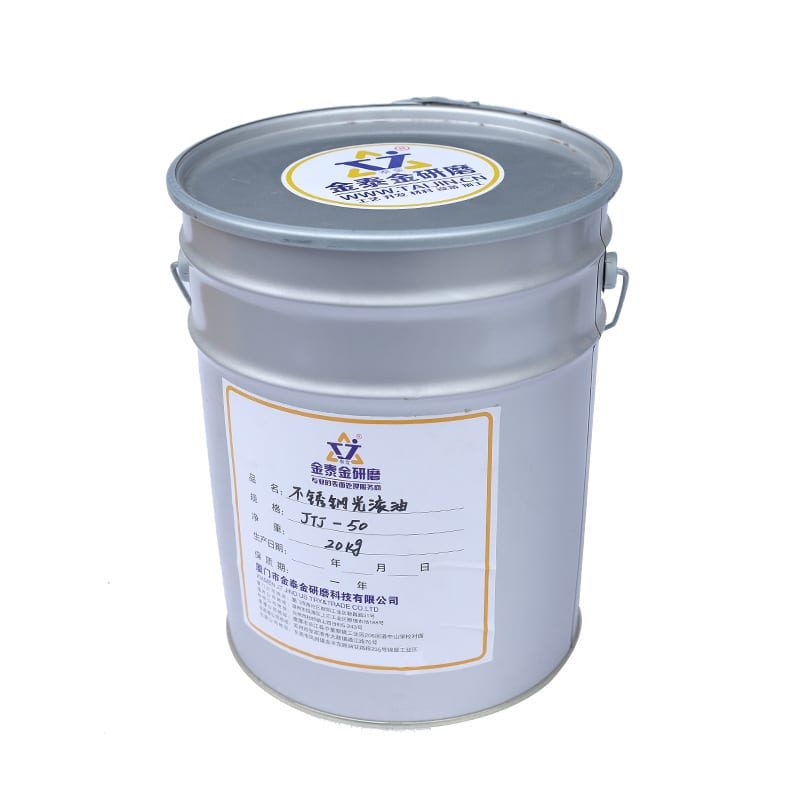
Compact welded stainless headers and turbo manifolds handle dense preformed ceramic media with MC8 descaling compound to strip weld discoloration and heat tint, followed by JTJ50 brightening in porcelain spheres.
Wide-Table OBD Magnetic Polishers for Port Openings and Tight Fillets
When internal manifold runners, injector bungs, and tight flange weld fillets need deburring and brightening where plastic or ceramic cones cannot reach, a wide-table OBD magnetic tumbler drives fine 304 stainless pins cleanly into port entrances and cross-bosses without altering flat flange geometry.
[DESIGN: Four-stage piston and manifold finishing sequence: degrease/mask, fixtured/divided wet cut, porcelain brighten, and heated spin-dry]
Media and Chemistry Rules for Aluminum vs. Stainless Engine Parts
Engine components span soft cast aluminum, forged 2618/4032 piston alloys, and tough stainless exhaust tubing—never run them in the same chemistry or media charge.

Neutral Compounds for Aluminum Pistons and Intake Manifolds
Aluminum alloys stain dark gray rapidly in high-pH alkaline cleaners. Always run neutral or dedicated aluminum-safe mass finishing compounds (JTS5 or neutral-balanced LC10 dilutions) with steady clean water flow-through so fine aluminum wear debris flushes out continuously. Maintaining steady clean flush water also keeps fine aluminum slurry from drying inside valve-relief pockets or blind injector bosses.
Why Steel Shot Abrasive and Coarse Ceramic Stay Off Aluminum Pistons
Never expose forged aluminum pistons or cast aluminum manifolds to coarse ceramic triangles or heavy stainless steel burnishing balls. Dense steel balls peen soft aluminum into dimpled "orange peel" texture, while coarse ceramic chews sharp valve-relief edges out of spec. Even brief accidental exposure to coarse ceramic ruins piston dome symmetry and ring-land flatness.
Separating Carbon/Stainless Exhaust Media From Aluminum Media
Keep ceramic charges used on stainless exhaust manifolds strictly isolated from plastic and porcelain charges used on aluminum pistons and intakes. Embedded iron particles from steel or stainless work cause galvanic pitting on damp aluminum engine parts. Dedicate clearly labeled media drums, screen decks, and drying baskets strictly by alloy family.
Immediate Clean-Water Flushing and Heated Centrifugal Spin-Drying
After wet finishing, flush pistons and manifolds thoroughly in clean water and dry them inside a heated centrifugal spin dryer (for compact pistons and small manifolds) or warm forced-air drying station so moisture never sits inside oil holes or injector bosses. Fast drying prevents white aluminum oxidation spots from forming on machined surfaces prior to coating or engine assembly.
Four Common Piston and Manifold Finishing Failures and How to Diagnose Them
Failure Mode 1: Rounded Piston Ring Lands or Scratched Skirts
Pistons fail ring-groove clearance checks or show dull horizontal scratches along skirts.
Diagnostic rule: If ring lands or skirts show wear or scratches, pistons were tumbled unmasked or collided in a free bowl—switch to fixtured drag finishing and fit protective urethane masking over ring grooves and skirts when polishing piston tops.
Failure Mode 2: Dented Gasket Flanges on Cast Aluminum Manifolds
Port-match flanges show tiny crescent dings along bolt ears after vibratory finishing.
Diagnostic rule: If flange corners show crescent dings, heavy manifolds collided inside an open bowl—move manifolds into a divided rectangular vibratory trough and switch from ceramic to lighter resin-bonded plastic cones.
Failure Mode 3: Dark Gray Etched Aluminum Surfaces
Cast intake manifolds or forged pistons exit dull charcoal instead of clean bright aluminum.
Diagnostic rule: If aluminum turns uniformly dark gray, compound pH is too alkaline or dirty aluminum fines recirculated in closed sump water—switch to neutral aluminum-safe chemistry and raise continuous clean water flow-through.
Failure Mode 4: Lodged Media Stones Inside Manifold Runners or Oil Holes
Operators discover stuck plastic or ceramic chips deep inside intake runners or piston pin bores.
Diagnostic rule: If media lodges inside runners or bores, loose stones were sized near port openings—cap small oil holes before tumbling, resize media comfortably larger than openings, and use magnetic pins rather than loose stones for port entrances.
| Symptom Observed | Root Cause | Immediate Fix |
|---|---|---|
| Rounded ring lands / skirt marks | Free tumbling without masking/fixtures | Use drag fixtures + urethane skirt/ring masking |
| Crescent dings on manifold flanges | Heavy part collision in open bowl | Switch to divided rectangular trough + plastic cones |
| Uniform dark gray aluminum | High-pH soap or dirty sump recirculation | Neutral compound + continuous fresh water flush |
| Stuck media in runners / oil holes | Media size ≈ port opening | Mask bores; resize media larger than openings |
[DESIGN: Troubleshooting matrix linking ring-land wear, flange dings, gray etching, and lodged stones to fixture and media fixes]
Preparing Piston Tops and Manifolds for Coatings vs. Bare Assembly
Understanding what happens after mass finishing ensures you pick the right surface texture.

Thermal-Barrier Coating Prep vs. Bare Polished Piston Tops
Pistons headed for ceramic thermal-barrier crown coatings need a clean, uniform satin-smooth dome free of sharp CNC peaks—achieved cleanly in fine plastic cones—without heavy wax residues that hurt coating adhesion. Bare motorsport pistons aiming for radiant heat reflection step up through high-alumina porcelain burnishing for a tighter, brighter finish that resists carbon buildup cleanly across race seasons.
Port-Matching vs. Exterior Cosmetic Manifolds
Internal intake manifold runners require smooth flow-path blending without changing port-match geometry at the head flange. Schedule heavy die-grinder port-matching before mass finishing, then use gentle divided-trough plastic tumbling and OBD magnetic pin cleaning to erase burrs and smooth accessible port entries cleanly without altering flange bolt-hole alignment.
Dry Organic Wipe-Down for Show-Quality Aluminum Brightness
For exposed billet or cast aluminum valve covers and intake manifolds requiring a spot-free bright sheen, pass clean, spin-dried parts briefly through warm corncob media or walnut shell—always checking all runner passages afterward to confirm zero organic granules remain inside ports. Blowing out blind bolt holes and injector bosses with clean dry shop air guarantees spotless assembly readiness.
Inspecting Piston Ring Grooves and Skirt Profiles Before Assembly
Never rely on outer dome shine alone when approving finished pistons. Inspect every piston under bright task lighting with a ring-groove feeler gauge, confirm zero plastic or porcelain dust remains inside oil-control drain holes, and verify that protective urethane masking kept skirt cam profiles untouched from start to finish. Logging crown finish checks alongside ring-land measurements protects engine builders against premature ring wear or oil-control failures.
Balancing Media-to-Part Ratios in Divided Manifold Troughs
Even inside a divided rectangular vibratory trough, cramming a heavy intake manifold into too tight a cell restricts media flow around deep runner webs and mounting flanges. Leave adequate clearance between the casting and each polyurethane divider wall so plastic cones circulate uniformly across every boss, bolt ear, and flange corner without starving shadowed pockets. Adjusting divider spacing per casting family gives consistent exterior smoothing without risking flange impact.
Avoiding Cross-Contamination Between Cast Iron, Stainless, and Aluminum
Performance engine shops often finish cast-iron exhaust manifolds, stainless tubular headers, and forged aluminum pistons in the same facility. Never share media charges, rinse baskets, or spin-dryer liners between ferrous exhaust parts and aluminum pistons or intakes, because embedded iron dust triggers galvanic pitting on damp aluminum surfaces overnight. Clearly color-coded media tubs and rinse baskets prevent accidental cross-contamination between ferrous and non-ferrous batches across high-mix motorsport and OEM engine shops.
Scheduling Mass Finishing Around CNC Porting and Honing
For billet cylinder heads, ported manifolds, and custom forged pistons, sequence heavy CNC machining and hand-porting before wet mass finishing, and schedule final cylinder honing or deck-surface lapping after rough deburring if tight sealing flatness is required. Separating rough deburring from final precision machining keeps scrap rates low across high-value engine builds and prevents stone impact on finished sealing decks, keeping gasket surfaces dead flat under boost.
Honest Capability Boundaries and Production Standards
What Mass Finishing Can and Cannot Do for Pistons and Manifolds
Mass finishing excels at polishing piston tops uniformly in fixtured cells, smoothing exterior manifold castings in divided troughs, and cleaning accessible ports with magnetic pins. However, mass finishing cannot machine deep intake runners end-to-end inside long curved plenums, cannot replace CNC port-matching or cylinder-honing, and does not provide ceramic thermal-barrier coating, anodizing, or contract job-shop engine polishing services. For broader equipment comparisons, see our aluminum polishing machine guide and tumble deburr guide. Keeping mechanical mass finishing aligned with upstream CNC porting and downstream thermal coatings maximizes yield on expensive engine hardware.
Managing Aluminum Wear Fines and Settling Tanks
Wet smoothing of forged pistons and cast aluminum manifolds generates fine gray aluminum slurry. Routing vibratory bowl and drag-finisher drains through a multi-baffle settling tank prevents fine metallic mud from plugging shop drains and stops gray slurry from recirculating back onto clean aluminum domes or sealing flanges.
Choosing Between Single-Cell Troughs and Multi-Spindle Drag Units
Job shops handling small batches of varied V6/V8 intake manifolds often start with a single divided rectangular vibratory trough because removable dividers adapt quickly to different manifold footprints. High-volume piston makers running consistent crown diameters get faster, repeatable dome finishes from multi-spindle planetary drag finishers with dedicated masking sleeves.
What We Supply and What We Do Not Supply
At Xiamen Jin Tai Jin Grinding Technology Co.,Ltd. (brand: Jings Polish), our workshop roots date back to 1996 and our company was formally established in 2009, delivering over 200,000+ sets of grinding and polishing solutions worldwide. Across our catalogue, we manufacture 21 machine platforms backed by 24 granted Chinese IP rights (1 invention patent, 15 utility model patents, and 8 design patents), under ISO 9001 certification 00726Q01571R001 (valid 2026-06-03 to 2029-06-02) and CE certifications M.2023.206.C88121 (Vertical, 8 models) and M.2023.206.C88120 (Horizontal, 13 models), valid until 2028-07-24.
To keep boundaries clear: we supply industrial mass finishing machines (drag finishers, divided rectangular vibratory troughs, circular vibratory bowls, wide-table OBD magnetic tumblers, rotary barrels, heated centrifugal spin dryers), tumbling media (resin-bonded plastic, high-alumina porcelain, ceramic, stainless pins, organic media), and liquid compounds (JTS5, LC10, MC8, JTJ50); we do NOT supply CNC porting mills, ceramic thermal-barrier coatings, anodizing/plating lines, handheld die grinders, or contract job-shop polishing services.

Honest Lead Times and Engineering Assessment
Standard machines ship in 25–35 days, while custom drag-finishing fixtures and divided manifold troughs require 45–60 days. Because piston diameter, manifold overall length, alloy type, and critical flange tolerances dictate fixture and trough sizing, we do not promise free sample trials by mail or guarantee cycle times before inspecting your workpiece—send clear photos of your pistons or manifolds showing critical ring lands, flanges, and port sizes via our custom polishing solution page for an engineering assessment. Clear photos next to a scale allow our engineering team to confirm fixture clearances and trough cell widths accurately.
Frequently Asked Questions
Can you tumble aluminum pistons loose in a standard vibratory bowl?
No. Loose tumbling in an open bowl peens compression-ring grooves, scratches piston skirts, and bruises dome edges. Polishing piston tops requires fixtured drag finishing with protective masking over ring lands and skirts.
How do you polish cast aluminum intake manifolds without denting gasket flanges?
Use a rectangular vibratory trough fitted with removable polyurethane dividers so each manifold sits isolated in its own cell, paired with low-density resin-bonded plastic cones and neutral aluminum-safe compound.
Can mass finishing clean inside long curved intake manifold runners?
Loose stones and magnetic pins clean port entries, flange edges, and accessible plenum pockets cleanly, yet cannot mechanically polish deep mid-runner bends inside long closed castings. Schedule CNC porting or abrasive flow work upstream if deep internal runner polishing is required.
What media is best for polishing piston tops before thermal-barrier coating?
Use fine resin-bonded plastic cones with neutral compound in a fixtured drag finisher to smooth CNC ridges evenly without leaving wax buildup, followed by clean rinsing and heated drying.
How do you remove weld heat tint from stainless exhaust manifolds?
Run compact stainless manifolds inside a divided vibratory trough with preformed ceramic media and MC8 descaling chemistry, followed by JTJ50 porcelain brightening and heated centrifugal spin-drying.
What details should I share before requesting a quote for piston or manifold finishing?
Send clear photos of your pistons or manifolds next to a ruler showing overall dimensions, ring grooves or flanges, and port openings, along with alloy grade and hourly batch target. Our engineers can recommend the right drag fixture, divided trough, and media from photos and drawings.
[DESIGN: Annotated buyer enquiry checklist showing piston/manifold photos, flange/ring-land notes, alloy grade, and hourly volume]
 +86-592-2381506


 IPv6 network supported
